Emma Arletta is taking her message beyond social media and into fashion, fitness and the real world.
Emma remembers the exact moment she realized there was a need for what would eventually become Big Girls.
It was COVID. She was finishing graduate school, living on an air mattress in her dad’s Missouri condo and scrolling through TikTok like everyone else. One day, a video showing places to shop for plus size clothing appeared on her feed. One of the boutiques featured in the video was familiar because Emma had modeled for the brand during college.
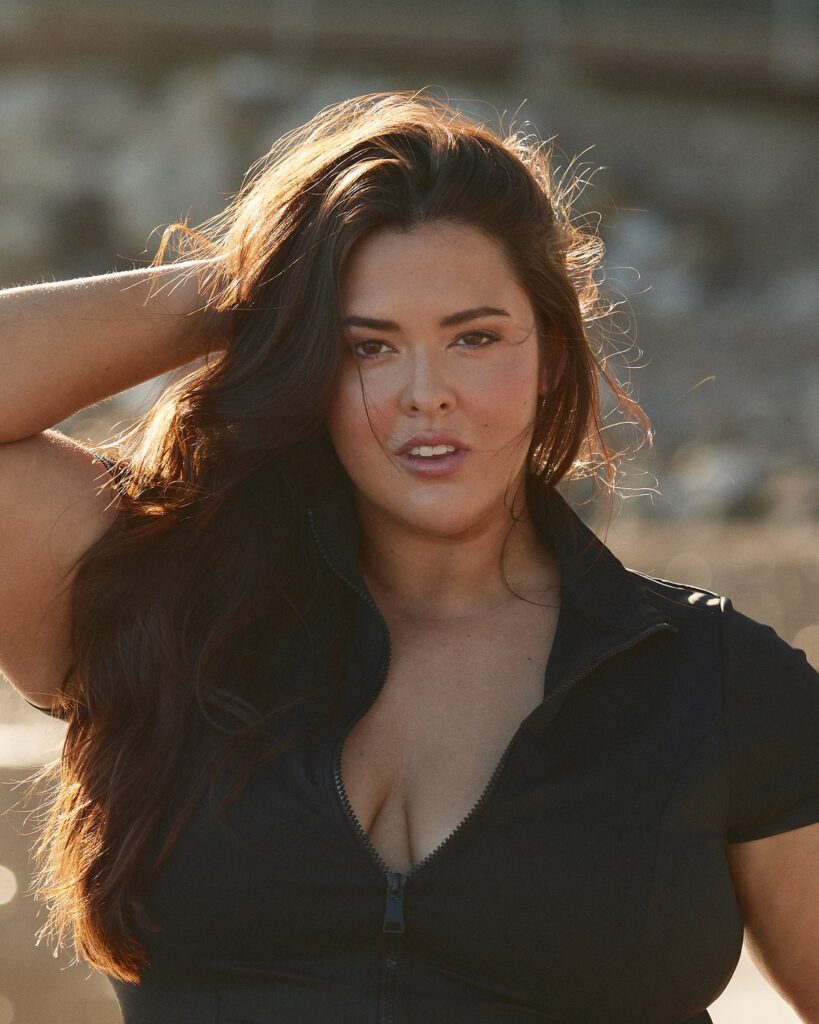
Then she saw herself.
Emma had spent years figuring out how to dress a bigger body, mostly through trial and error. But she had never really considered that the things she had learned along the way could be useful to thousands of other women.
So, she made a reaction video.
She was sitting at her dad’s kitchen table, phone in her lap, and she wasn’t exactly feeling camera-ready. In fact, she almost didn’t post the video because she thought the angle was embarrassing.
Then she decided that nobody she knew was really following her on TikTok anyway, so why not?
The next morning, she woke up to 30,000 new followers.
Her comments were filled with women asking where they could shop and how they could find clothes that fit.
That was Emma’s “Oh, there is something here” moment.
“I’ve done the trial and error for 20-something years of my life,” she told us. “And so that’s when I was like, oh, my gosh, there’s a need for me to share these things.”
Those early videos were not exactly the polished content we’re used to seeing today. Emma was using Snapchat filters, saving the videos and uploading them to TikTok.
She cringes looking back at them now.
But they worked.
And more importantly, they created the beginning of a community.
Before Big Girls, There Was Speech Therapy
Today, Emma’s work centers on fashion, confidence, fitness and entrepreneurship. Before that, she was a speech therapist.
Emma Arletta grew up in Missouri and eventually moved to Los Angeles after graduate school, where she worked in LA public schools. She had studied speech therapy because she wanted to help people, something she says still connects to the work she does now.
The transition into content creation wasn’t some carefully mapped-out five-year plan.
In fact, Emma is very much a planner. She likes knowing what’s coming next and knowing that she’ll be able to pay her bills. Leaving a stable career for something as unpredictable as content creation was not an easy decision.
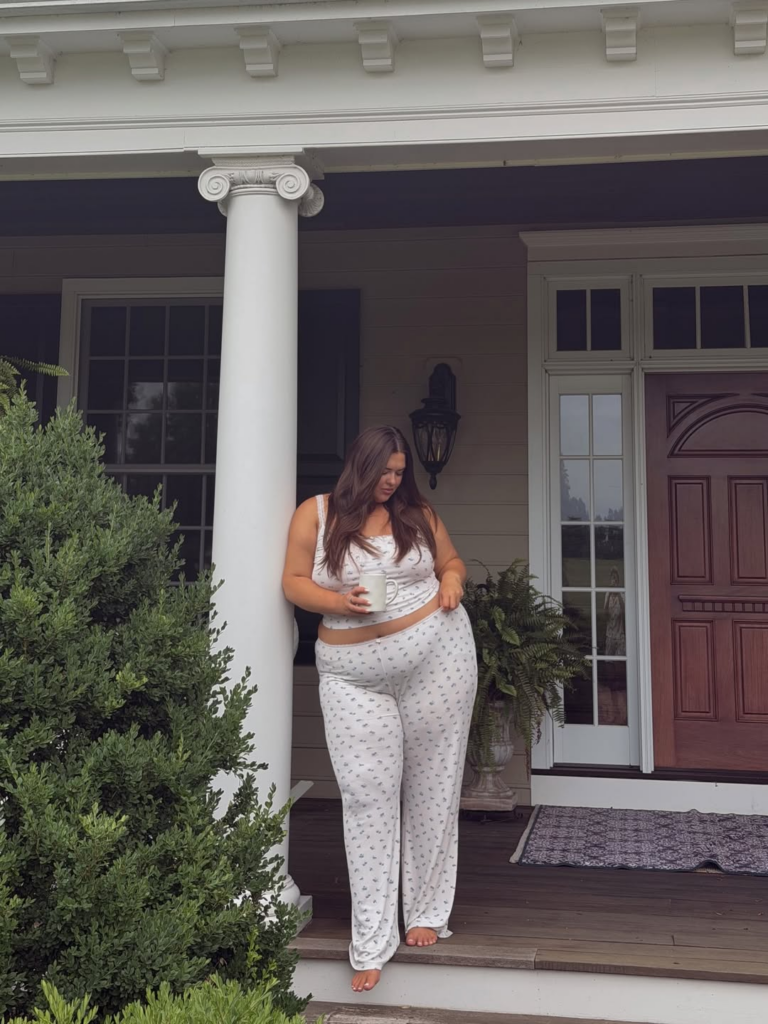
She spent her first year working as a speech therapist while building her platform on the side. Then she found herself in an unexpected position: The side hustle was starting to bring in serious money, but she was also exhausted from trying to do both.
Emma remembers coming home from work and moving clothes off her bed just to make enough space to sleep.
Her laundry wasn’t getting done. She was eating out constantly. There was no real routine because she was spending her days trying to keep up with her job and her brand deals.
Meanwhile, social media was full of women documenting their 5 a.m. routines before heading into their nine-to-five jobs.
Emma couldn’t relate.
“I would feel so defeated,” she said. “I’m like, OK, how are these people getting up every day and doing these things? And, like, I can’t even clean my laundry.”
Eventually, she had to stop comparing her life to what she was seeing online.
Sometimes, she realized, doing your job, coming home, eating dinner, working on your side hustle and going to sleep is enough.
That period also forced Emma to seriously consider whether content creation could become her full-time career.
She had initially thought she hadn’t completed enough hours to become fully certified as a speech therapist. Then she received an email confirming that she actually had.
Around the same time, she landed a brand deal worth almost her annual speech therapy salary.
The decision suddenly became a lot less theoretical.
“If I can make this much money working on the weekends for maybe, let’s say, 10 hours a week, imagine what I could do if I could work for 40 hours a week on this side hustle,” she recalled thinking.
Five years later, she’s still working for herself.
Emma Arletta on Reclaiming “Big Girls”
The name Big Girls wasn’t chosen randomly.
Emma knows what it means to grow up hearing the word “big” used as an insult.
She remembers being a child and going shopping at Gymboree with her mother. The store’s sizing was based on children’s ages, and Emma realized she couldn’t fit into the sizes intended for girls her age. She was already wearing teenage sizing.
That feeling of being different can stay with you.
As she got older, Emma noticed how often being the “big girl” was treated like a negative part of her identity.
Eventually, she decided she was done accepting that definition.
Her work as a speech therapist also gave her some perspective. The children she worked with weren’t concerned about the size of her jeans. Her friends weren’t measuring her worth by her clothing size. Her family wasn’t either.
There were so many things about her that mattered more.
So, Emma reclaimed the phrase.
There was also a little strategy behind it. When she started her videos, she wanted a phrase that people would remember. “Big Girls” became her introduction and eventually grew into the name of the community.
Now, women recognize her in public and tell her, “You’re the Big Girl girl.”
And she knows exactly what that means.
Confidence Is Something You Keep Working On
One of Emma’s biggest misconceptions about confidence is that people think you eventually arrive at it.
According to her, it doesn’t work that way.
She still has days when she looks in the mirror and doesn’t like what she sees. Social media can make that reality difficult to understand because we’re constantly watching people present their most confident selves.
Emma believes clothing, makeup and beauty can absolutely help you feel good. Anyone who has put on an outfit and immediately walked a little differently knows that feeling.
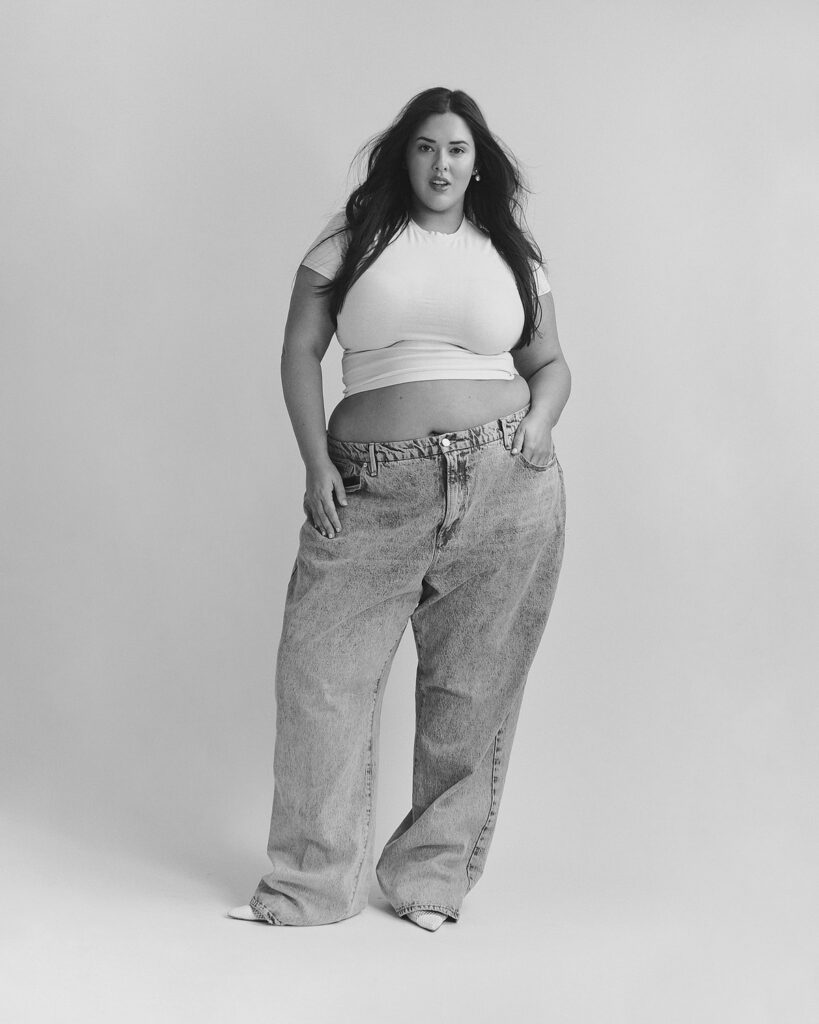
But she doesn’t believe those things are where lasting confidence comes from.
For her, confidence has been built through doing things that challenge her: learning new skills, showing up for people she loves and taking risks in her career.
When she’s having a particularly rough day with negative self-talk, she doesn’t force herself to immediately become positive.
She gives herself 24 hours.
Emma lets herself have the bad day, then thinks about what she can do the next day to feel more like herself. That might mean doing a face mask, waking up earlier for a slower morning or putting together an outfit she already knows makes her feel good.
It’s less about pretending the bad feelings aren’t there and more about making sure they don’t become the default.
The Body You Have Today Deserves a Life, Too
Emma’s thoughts on confidence naturally extend into how she thinks about body image.
She often thinks about old photos of herself and how differently she sees those images now. There were moments when she thought she was too big, only to look back later and wish she could have that body for a day.
That realization makes her think about her future self.
She doesn’t want to reach the end of her life and realize she spent years worrying about the size of her body.
“I don’t want to be on my deathbed and think, dang, I wasted hours and years of my life worried about the size of my body,” she said.
It’s a simple question, but it changes the perspective.
How much of your life are you willing to spend waiting until you look different?
Plus Size Fashion Doesn’t Need to Be Boring
Emma Arletta isn’t interested in following every fashion rule traditionally handed to plus size women.
Her approach is much more personal. Some days, she wants something oversized and loose. Other days, she wants something fitted. It depends on what makes her feel good when she gets dressed.
She also doesn’t limit her fashion inspiration to plus size retailers.
Emma regularly looks at straight-size websites to see what’s happening in fashion and figures out how she can translate those ideas into her own wardrobe.
Sometimes she’ll find a similar piece in plus size. Other times, she might alter something or pull inspiration from accessories.
That approach comes from growing up wanting to wear what everyone else was wearing.
Plus size women shouldn’t have to wait until a trend makes its way to them.
And Emma has a pretty specific personal uniform when she wants to feel like herself: a fuller bottom with a fitted top. Think baggy pants with a fitted tank or sweater.
Her current closet essential?
She likes them with a kitten heel and a funnel-neck jacket for fall. Swap the heel for a flat and add some glasses, and she’s still happy.
Emma is also ready for color to make a comeback.
After years of muted wardrobes and “sad beige mom” aesthetics, she’s craving more color and that playful early-2000s energy again.
Honestly, she’s onto something.
Designers, Please Talk to the Plus Size Woman at the Table
Emma’s experience working on plus size collections has reinforced something she has been saying to brands for years: You need plus size women involved in the design process.
A plus size body isn’t simply a straight-size body made larger.
Fit can change depending on where someone carries their weight, their bust, their hips, their stomach, their height and a host of other factors.
Emma thinks designers need someone at the table who actually understands those realities.
Her work on a plus size bridal and an eventwear collection also challenged some of her own assumptions.
She initially thought plus size shoppers might want more simple, safe pieces because that’s what the market has historically given them.
The feedback told her otherwise.
Women wanted lace. They wanted statement pieces. They wanted fashion-forward options.
The lesson was clear to Emma: She didn’t need to play it safe on behalf of plus size women.
They weren’t asking her to.
Emma Has Gone From Calling Out Fashion to Designing It
This year has brought a major shift in Emma’s career.
For years, she was the creator explaining what brands were getting wrong about plus-size fashion. Now, brands are asking her what she wants to create.
She’s had the opportunity to work on a bridal collection with G.I.A/IRL , a swim collection with Goldie Swimwear and another G.I.A/IRL collection for fall.
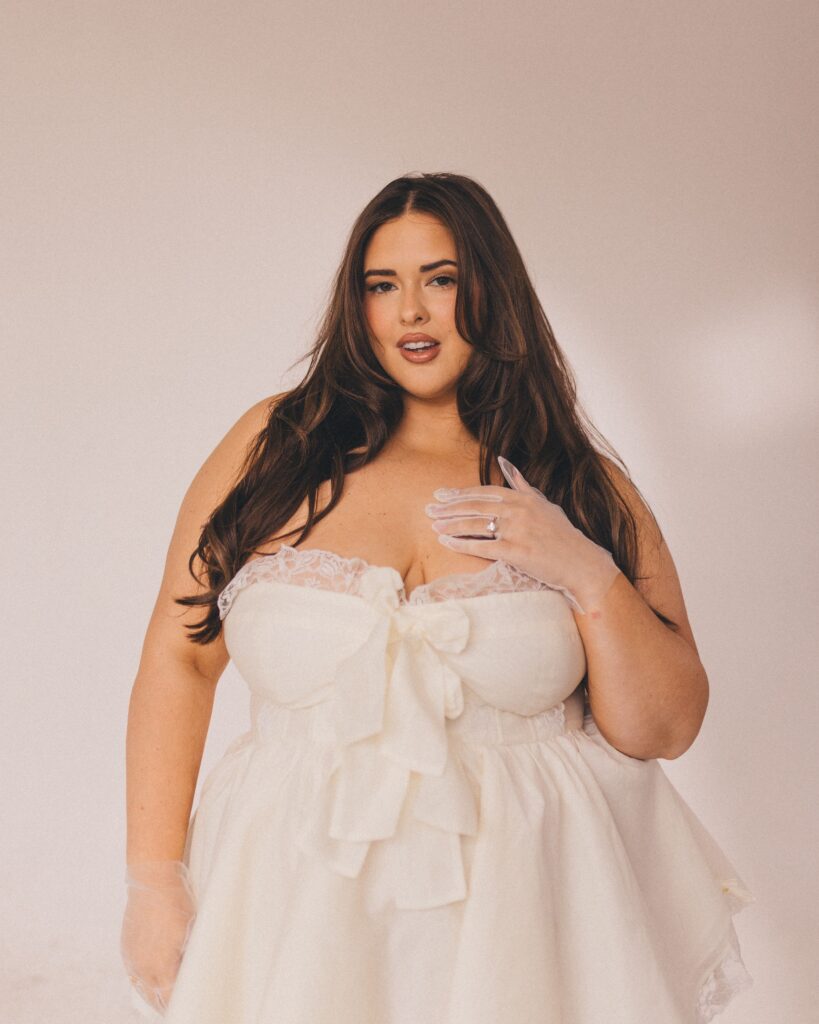
That change has been exciting, but it has also been humbling.
It’s one thing to see a garment online and think you would have designed it differently. It’s another thing to actually sit in the room and make the decisions.
Now Emma has to think about garment costs, fit, different heights, different bust sizes and different body shapes.
“There are so many things to think about,” she said.
She’s enjoying being in that learning phase again.
She feels like she understands content creation and knows her community deeply. Now she’s figuring out how to translate that knowledge into clothing and experiences that people actually want to wear and participate in.
The upcoming fall G.I.A/IRL collection includes workwear, going-out pieces, comfort and athleisure.
And Emma Arletta gave us a little preview: There’s a dark brown athleisure set with fold-over pants designed to actually cover the belly, plus a zip-up top.
Consider us listening.
Hating Yourself Has Never Been a Fitness Plan
Emma’s newest chapter is taking her into another space where plus size representation is still lacking: fitness.
She’s now a Pilates instructor, and her approach to movement is closely connected to everything she believes about confidence.
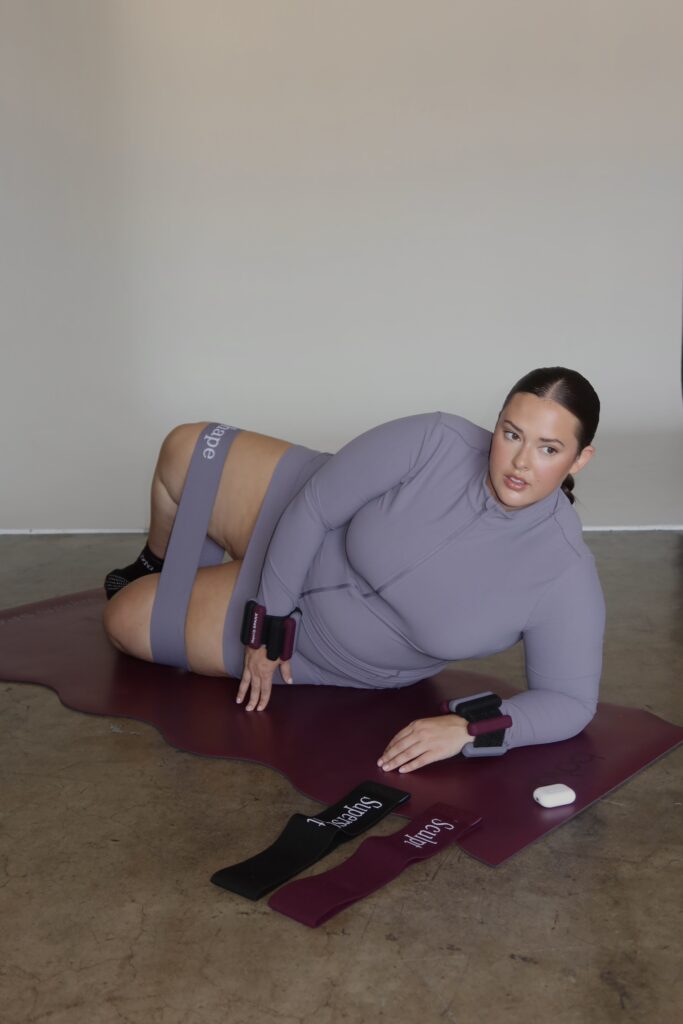
Her philosophy is straightforward: Hating yourself has never gotten you where you want to go.
Emma isn’t interested in treating movement as punishment for eating, gaining weight or not looking a certain way.
She also isn’t interested in telling women that wanting to lose weight means they don’t love themselves.
For her, body positivity means being able to care for yourself and appreciate your body regardless of what shape or size it is.
Pilates has also given Emma another way to practice confidence because she had to become a beginner again.
There’s something humbling about walking into a class when you don’t know what you’re doing. You don’t know how your body will respond, and you don’t automatically feel competent.
That’s exactly why Emma values it.
Her plus size Pilates events aren’t just about completing a workout. She’s excited about women showing up and seeing other women who look like them doing the same thing.
She remembers how nervous she was teaching her first class.
Now, she’s planning to bring that energy to New York during Fashion Week as part of a Big Girls Weekend, which will include a plus size Pilates event.
For Emma, the room itself is part of the experience.
There’s something different about looking around and seeing other plus-size women navigating the same complicated relationship with fitness.
Big Girls Is Getting Bigger Than the Internet
Emma’s vision for Big Girls has expanded beyond content.
She’s thinking about what happens when an online community gets to meet in person and experience something together.
That’s where she believes some of the real magic happens.
The next phase includes more events, more fashion and more fitness, with the goal of making Big Girls a space where plus size women can actually experience community instead of simply scrolling past it.
Over the next five to 10 years, Emma especially wants to make noise in the fitness industry.
She sees a shortage of plus size instructors and believes women deserve to see people in bigger bodies leading movement spaces.
Her goal isn’t to make fitness another place where women are told they need to become smaller.
She wants it to be a place where they can learn what their bodies are capable of.
And Then There’s Life Outside of Big Girls
For all the conversation around business, fashion and fitness, Emma Arletta is also thinking about what comes next personally.
She’s considering starting a family, which brings a whole new set of questions for someone who admits she doesn’t love uncertainty.
Her husband also works with her on social media, so the two are already thinking through what their business and family could look like in the future.
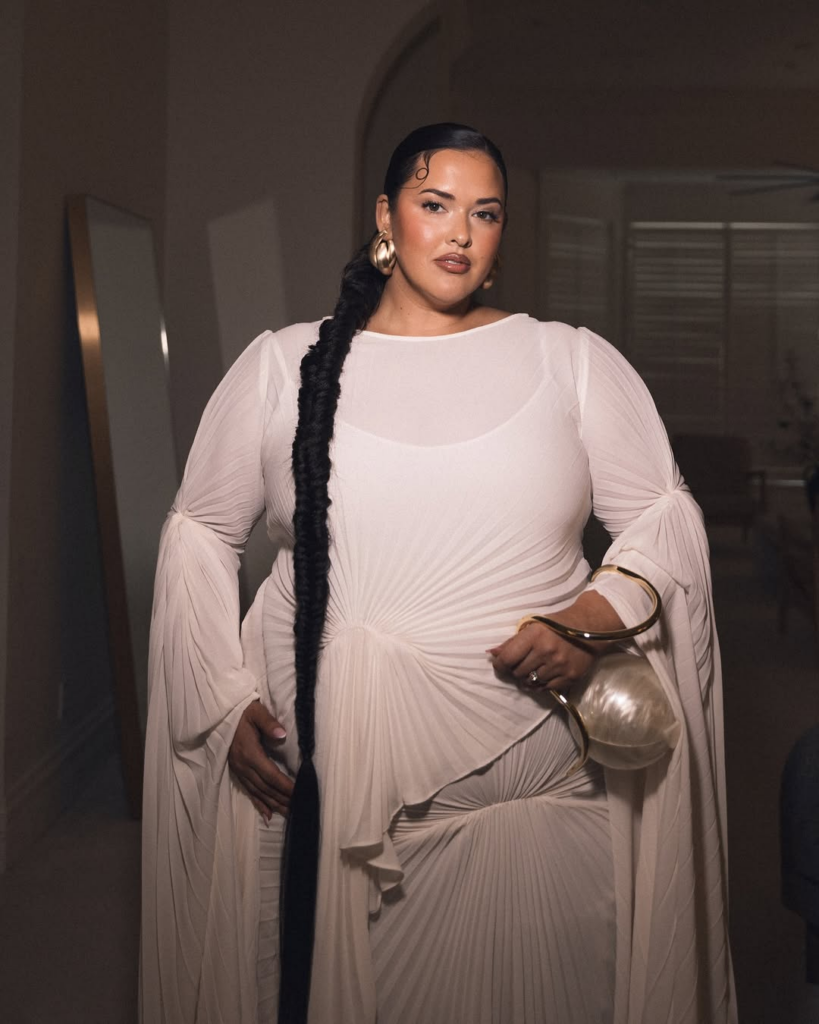
It’s another chapter she can’t fully plan yet.
And maybe that’s the point.
Emma’s career started with a TikTok she almost didn’t post because she thought nobody would see it.
Now she’s building collections, teaching Pilates, planning events and creating a community that reaches far beyond that kitchen table in Missouri.
She didn’t know where that first video would take her.
She just knew there were women looking for someone who understood how they felt.
Five years later, she’s still answering them.
And she’s giving them plenty more reasons to take up space while she’s at it.
Big Girl Confessions
If you really want to know Emma, skip the polished career bio and ask her about her closet, her snacks and the story of how her husband initially swiped left on her.
Her favorite snack is Nacho Cheese Doritos, preferably with a dip. Her current obsession is the upcoming GIA/IRL fall collection, which she is anxiously waiting to receive in her size.
Her fashion comeback is color, because she’s ready for the “sad beige mom” era to make room for something a little more fun.
Her unpopular opinion? Losing weight doesn’t mean you can’t be body positive.
And the one thing she’ll always spend money on?
A house cleaner.
Emma proudly admits she’s messy and considers professional cleaning an investment in her sanity.
Then there’s her dating-app story.
When her now-husband first saw her profile, he swiped left because he thought she looked high maintenance. The evidence? Several Louis Vuitton bags in her photos.
The bags were fake.
Emma was broke in college.
They eventually figured it out.
Now they’re married.
So, yes, there is hope for the rest of us.
For Emma, though, the bigger story is what happens when you stop letting other people’s expectations determine how much room you’re allowed to take up.
Big Girls started as a phrase on TikTok.
Now, it’s becoming a world of its own.
MORE TCF GAMES