There is a moment that happens when you walk past a luxury storefront.
The fabrics are lush.
The tailoring is sharp.
The prices are audacious.
And the sizes quietly whisper, not you.
But here is the part no one wants to say out loud. The issue was never demand. It was imagination.
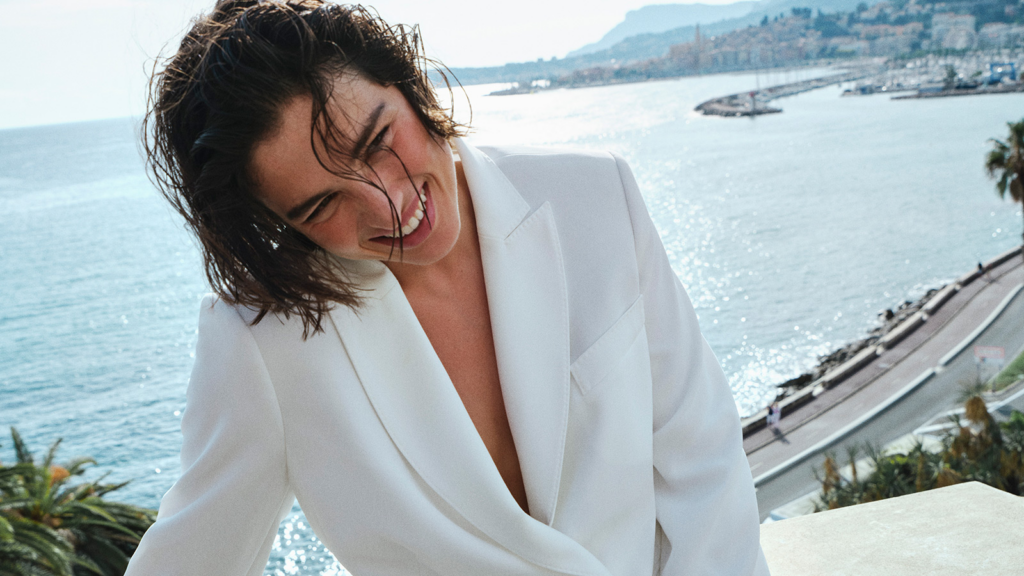
The plus size luxury fashion market is not a niche. It is not experimental. It is not aspirational. It is a fully formed, cash ready, taste level elevated consumer group that luxury fashion ignored for decades. Not because we were not there, but because they did not bother to design for us.
And now?
Now the industry is scrambling to catch up.
Let me show you why.
The Plus Size Luxury Fashion Market Is Booming and Luxury Brands Are Catching Up
The Billion Dollar Size Gap Nobody Wants to Admit
I was not the only one noticing something felt off during fashion month. In my research, I kept running into the same uncomfortable truth.
According to a size inclusivity analysis published by Vogue Business, only 0.8 to 1.2 percent of runway looks were plus size, defined as US size 14 and up. Mid-size barely fared better. Over 95 percent of fashion week presentations were straight size only.
That number is not just embarrassing. It is expensive.
Because while luxury fashion keeps pretending plus size women are a fringe customer, the global luxury goods market reached $388.85 billion in 2023, according to Statista.
And this disconnect becomes even louder when you look at who women actually are. Public health data shows that the majority of women wear sizes above what luxury fashion still centers.
In the UK, average sizing data reported by the BBC confirms this reality.
In the US, CDC data reinforces the same point.
This is not a niche problem. It is a scale problem.
Why Plus Size Luxury Is Growing Faster Than Anyone Expected
Here is where things get interesting.
Mass market brands still dominate plus size clothing sales, accounting for over 70 percent of the category. But premium and luxury plus size fashion is projected to grow at a much faster rate over the next five years.
Why?
Because plus size shoppers are not only asking for cheaper. They are asking for better.
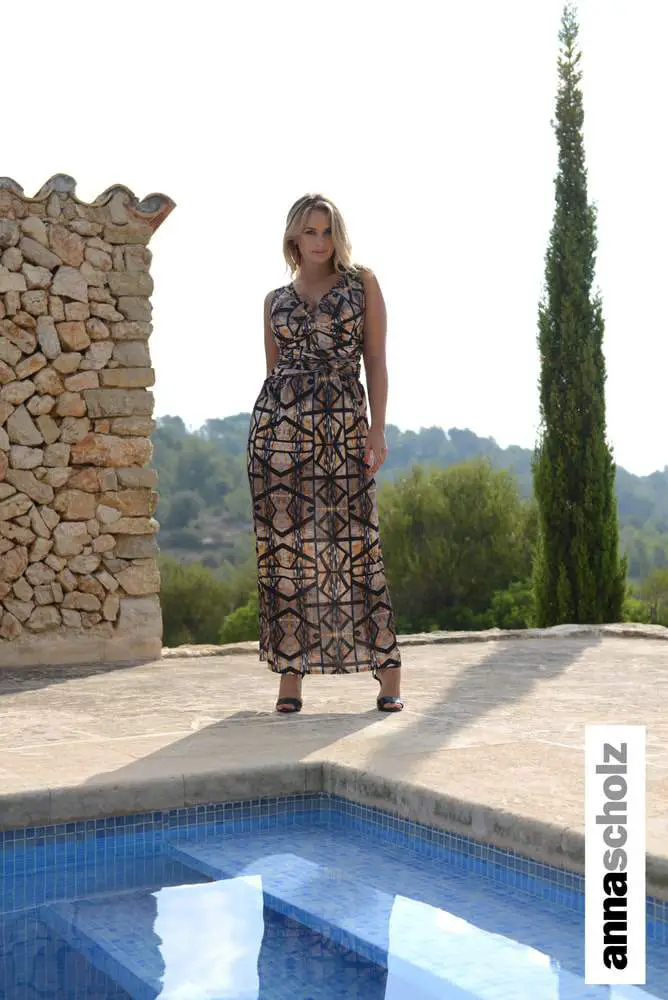
In my research, I kept seeing the same pattern. Plus size women want luxury fabrics, thoughtful construction, and silhouettes designed for their bodies from the start. Not scaled up leftovers.
As fashion analyst Elizabeth Segran once pointed out in her coverage of inclusive design economics, consumers are willing to pay more when brands respect their bodies and intelligence. That logic applies here too.
Luxury plus size is not about affordability. It is about dignity, design, and desire.
The Marina Rinaldi Blueprint
If anyone figured this out early, it was (and still is) Marina Rinaldi.
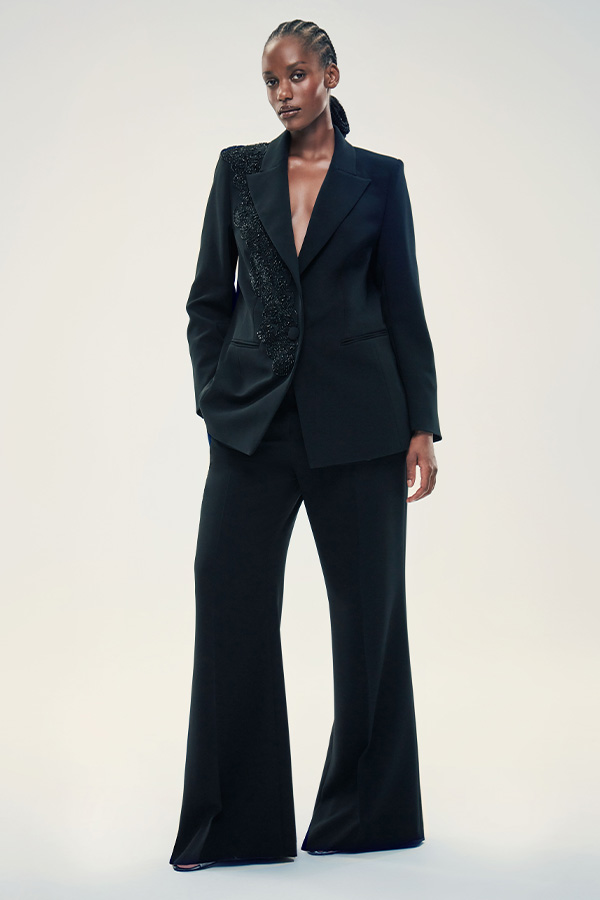
They did not scale up straight size patterns. They built an entirely separate design philosophy centered on plus size bodies. Construction changed. Proportions changed. The result felt intentional.
That approach became the blueprint.
Their collections are regularly covered by Vogue Runway, reinforcing their position as a legitimate luxury fashion house, not a side category.
That approach became the blueprint.
Newer brands followed with ethics and sustainability layered in, proving that plus size luxury consumers value craftsmanship, longevity, and values as much as aesthetic.
Why Digital First Is Winning for Plus Size Luxury
Here is a quiet shift happening behind the scenes.
Traditional retail still dominates the broader plus size market. But luxury plus size brands are doing the opposite. They are launching online first.
Why? Control.
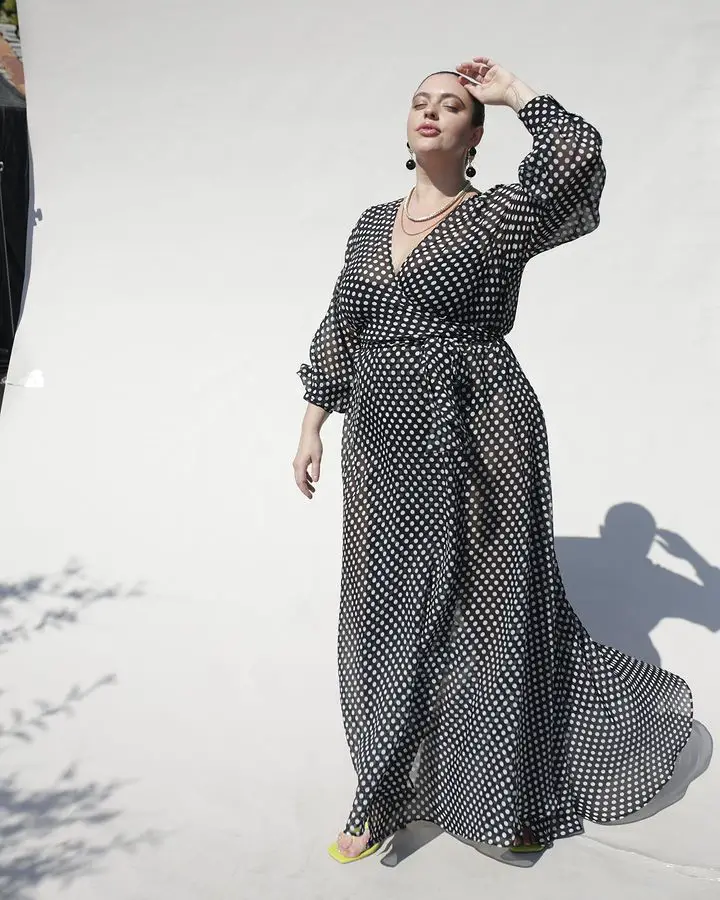
While brick and mortar still dominates traditional retail, luxury plus size brands are increasingly launching online first. Retail analysts at McKinsey have repeatedly highlighted how e commerce growth is outpacing physical retail in fashion.
For plus size luxury brands, digital first is about control. Fit data. Feedback loops. Customer trust.
And that information is invaluable when designing for bodies the industry historically misunderstood.
The Real Reason Luxury Brands Hesitated
Let us clear something up.
Yes, plus size garments use more fabric. Yes, pattern grading is more complex. But that is not the real barrier.
Yes, plus size garments often require more fabric. Yes, pattern grading is more complex.
But the real barrier has always been expertise.
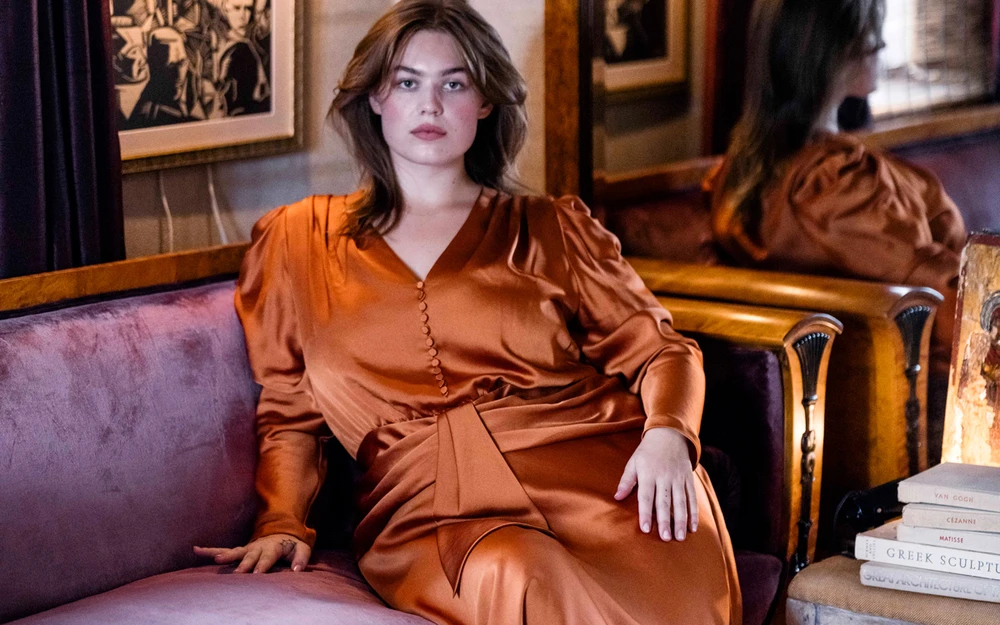
As reported by FashionUnited, extended size apparel requires specialized pattern development and construction knowledge that many brands simply never invested in.
Luxury plus size brands that do invest turn this challenge into a competitive advantage.
Collaborations Are the Industry Testing the Waters
If you were paying attention, you saw this coming.
When Adidas partnered with 11 Honore, it was not just a collaboration. It was market research with a press release.
And when Full Beauty Brands acquired Eloquii, it confirmed what insiders already knew:
Plus size is not a side category. It is a growth engine.
Technology Is Doing the Heavy Lifting
Another thing I kept running into while researching this space was how much technology is shaping success.
AI powered fit tools, 3D garment modeling, and custom sizing algorithms are not trends. They are infrastructure.
According to McKinsey, AI powered product discovery and fit technology are reshaping fashion retail.
Platforms like Edited have also documented how fit technology reduces returns and improves sizing accuracy, particularly in extended sizes.
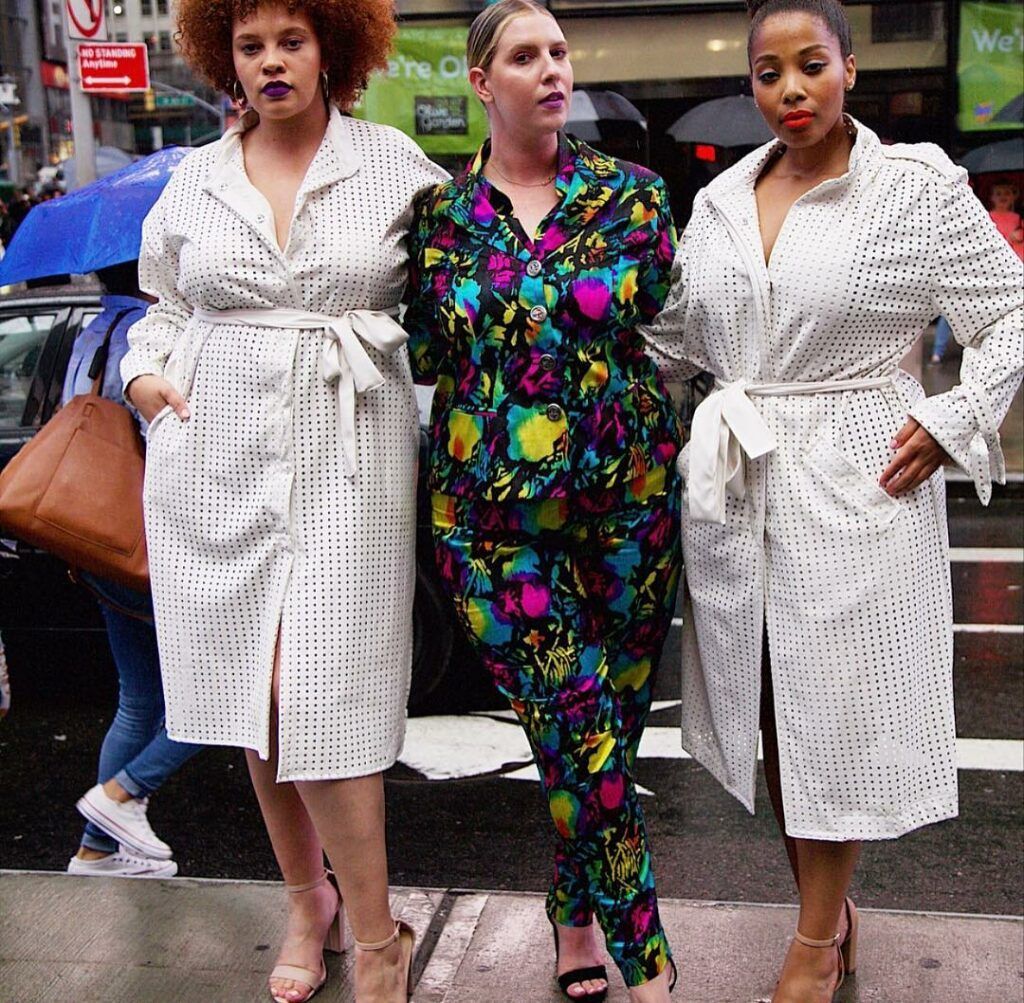
For plus size luxury brands, this tech builds trust. And trust builds loyalty.
Europe Is Quietly Doing This Better
North America dominates plus size fashion revenue, but Europe is setting the tone for luxury execution.
According to Statista, Europe is projected to lead growth during the forecast period.
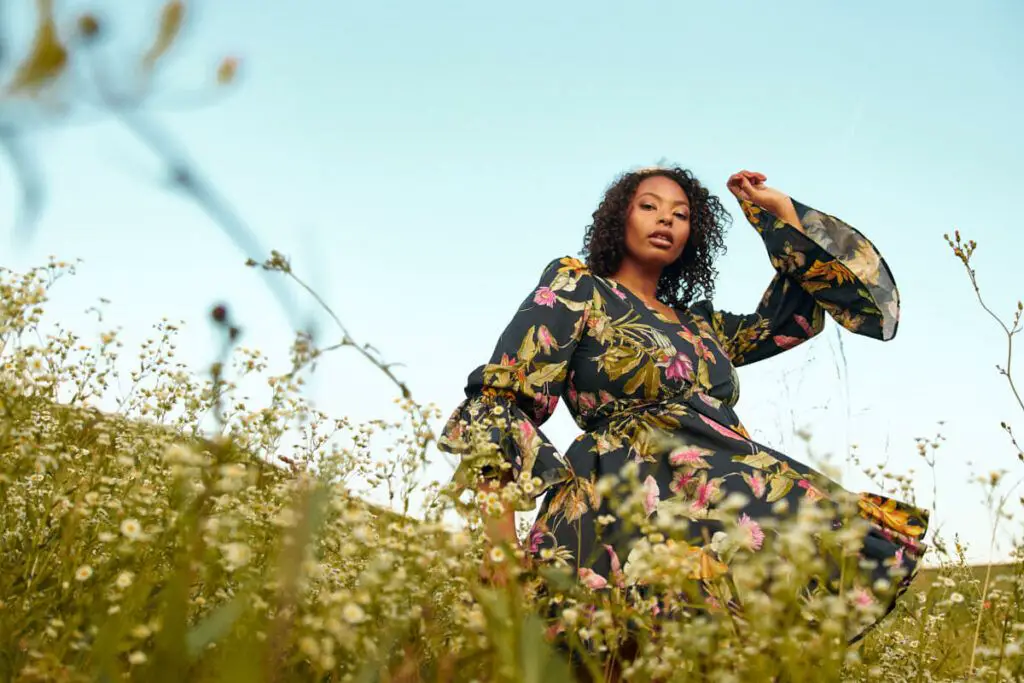
Brands like Marina Rinaldi, Elena Mirò, and Loud Bodies show what happens when plus size is treated as a design starting point rather than a limitation. In much of Europe, extended sizing is folded into the brand’s core identity, not carved out into a separate, lesser category.
Luxury plus size is not marketed as brave. It is marketed as normal. And that shift matters.
Sustainability and Plus Size Luxury Go Hand in Hand
Here is something I found that surprised even me.
Plus size consumers are often more loyal to brands that prioritize quality and longevity. That makes sustainability a natural fit, not a marketing gimmick.
When you design garments meant to last, meant to be worn often, meant to feel good on real bodies, the pricing conversation changes.
This is why sustainable luxury resonates so strongly in the plus size space.
Influencers Are Not Selling. They Are Translating
Luxury plus size brands do not use influencers the way mass market brands do, and that distinction matters.
Instead of chasing follower counts, these brands prioritize credibility. Fit credibility. Taste credibility. Body credibility. The kind of trust that cannot be manufactured by a discount code.
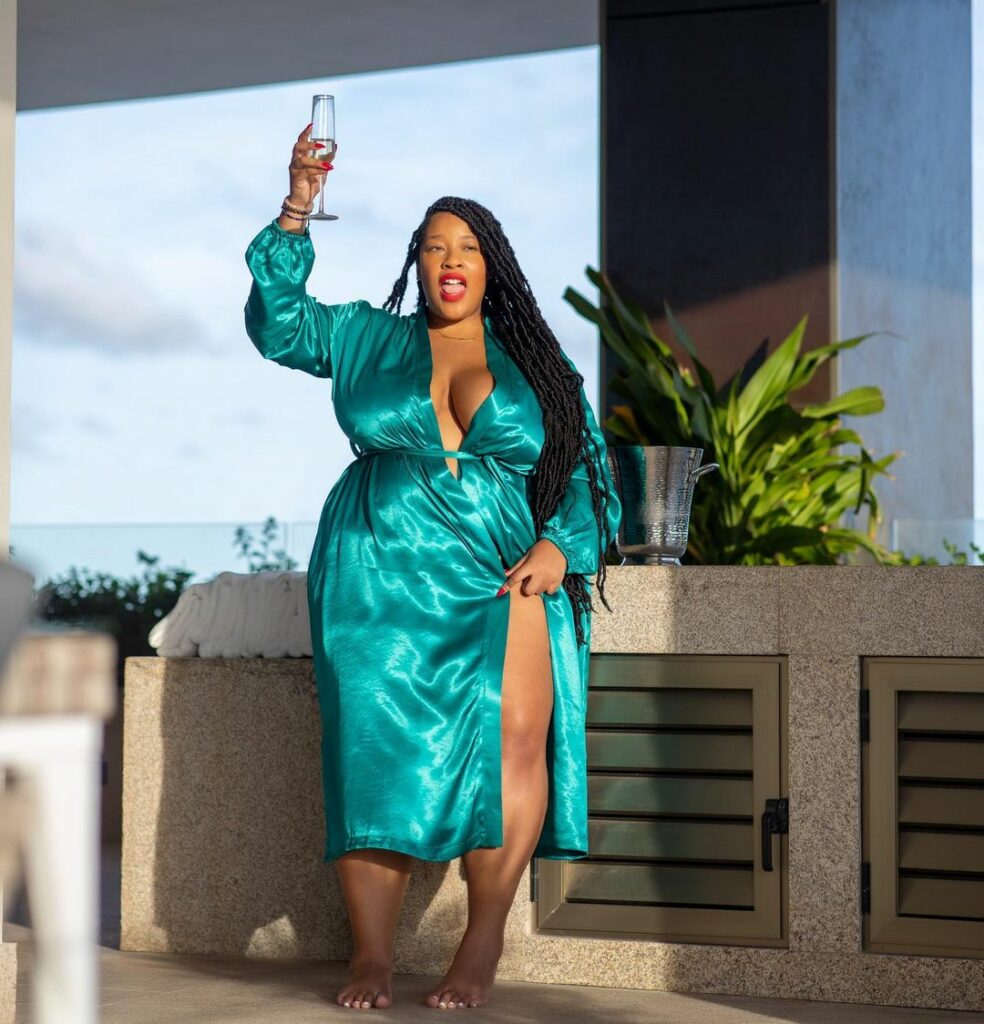
As I was researching how luxury plus size brands actually move product, one pattern kept showing up. They consistently partner with creators who already act as translators for their audience. Women who explain how a garment actually fits, how it moves on a plus size body, and whether the quality matches the price tag.
That is where micro influencers come in.
According to Influencer Marketing Hub, micro influencers consistently outperform larger creators when it comes to engagement and trust, particularly in niche markets.
And plus size luxury is nothing if not a niche built on nuance.
Take platforms like 11 Honoré (RIP), which regularly partnered with plus size fashion editors, stylists, and tastemakers who already spoke the language of luxury. These creators were not convincing their audience to want luxury. Their audience already did. They were answering the real question: Is this worth my money and will it fit my body the way it should?
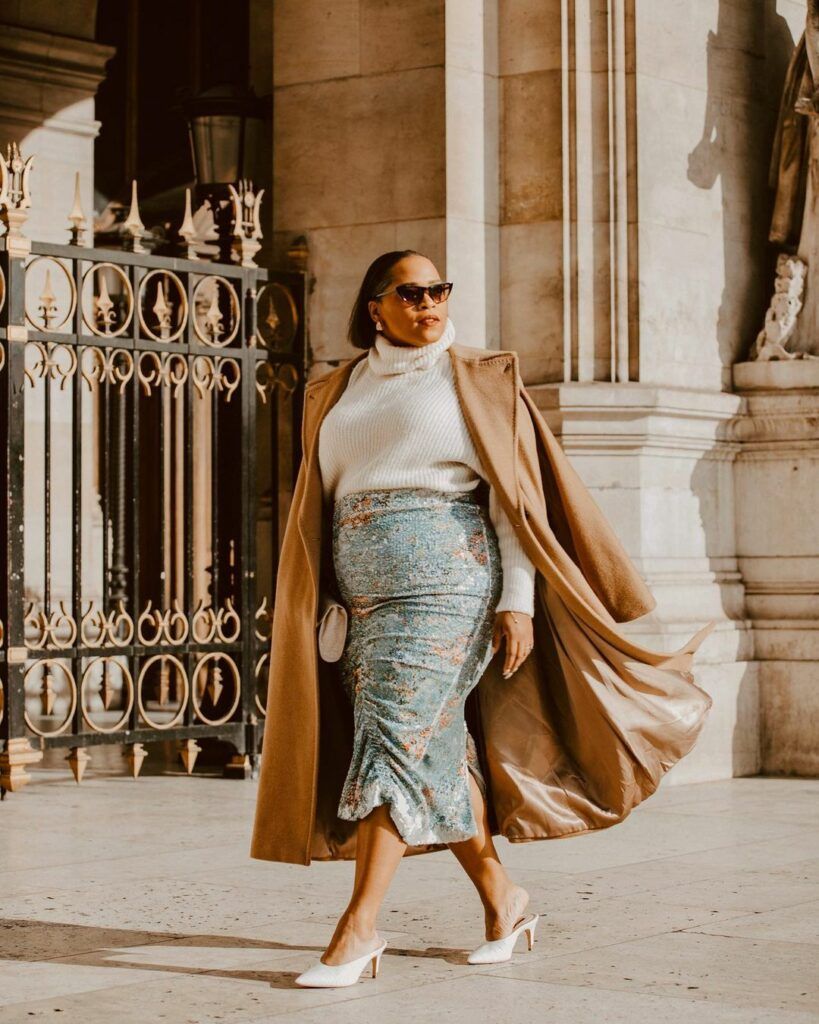
Similarly, brands like Henning (Now folded into Universal Standard) built their entire marketing strategy around trusted voices rather than high-volume campaigns. Their creators walked audiences through tailoring, fabric weight, and wearability. Not hype. Context.
This approach works because plus size luxury shoppers are not impulse buyers. They are intentional. They have been burned before by brands that promised quality and delivered disappointment. So, they listen closely to people who have already done the trial run.
This is also why luxury plus size brands often avoid splashy influencer moments. Exclusivity still matters. Oversaturation breaks the spell. A single, well-placed creator with a deeply engaged audience does more for brand equity than a dozen broad reach posts ever could.
In this space, influencers are not billboards. They are interpreters. They bridge the gap between aspiration and reality, translating luxury fashion into something tangible, wearable, and trustworthy for plus size bodies.
And in a market built on long-term loyalty, that trust is the real currency.
The Future Is Not a Guess. It Is a Forecast
The global plus size fashion market is expected to approach $300 billion by 2032. That growth is not theoretical. It is happening.
Luxury brands that moved early will dominate. The rest will play catch up.
Because this moment is not about inclusion buzzwords.
It is about money, loyalty, and long overdue design intelligence.
The plus size luxury fashion market is not emerging.
It has arrived.