
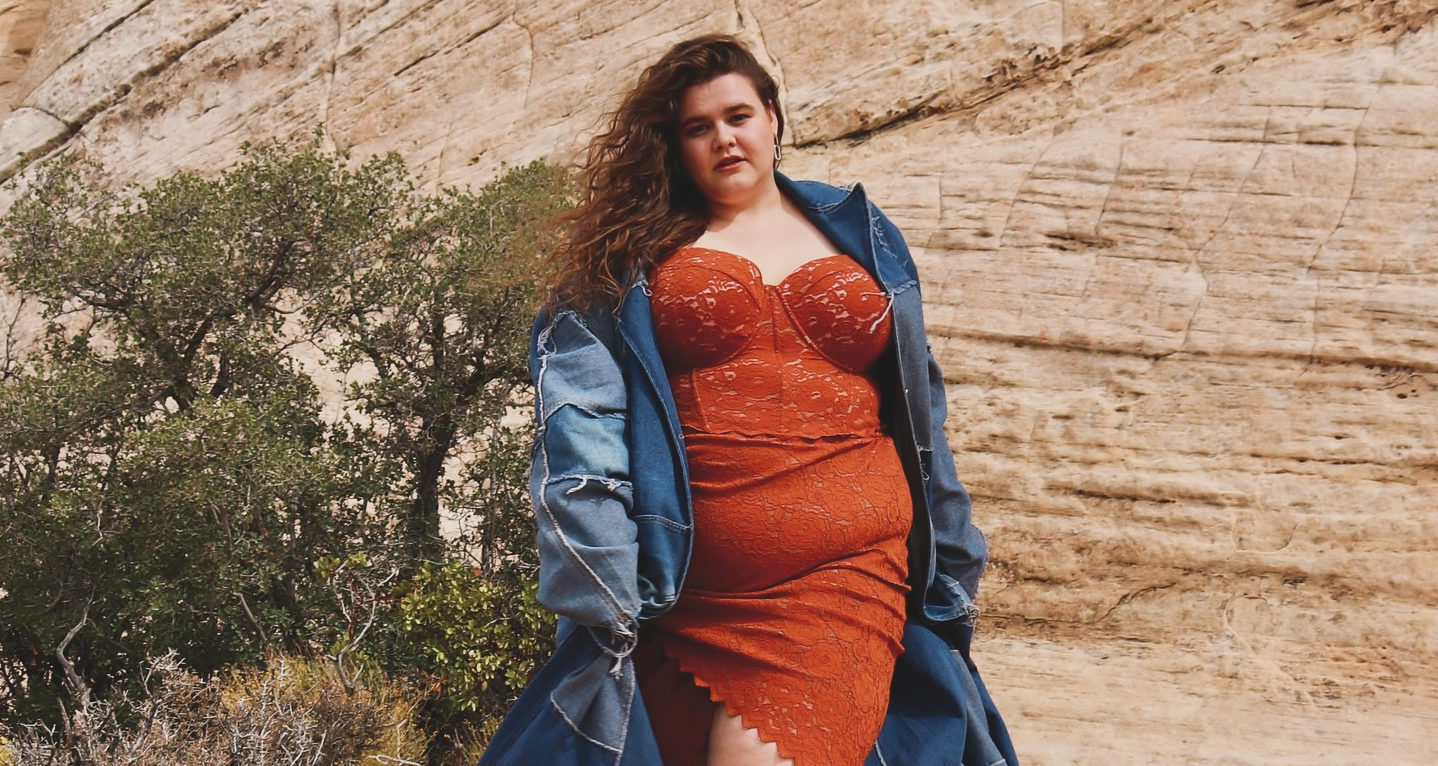
Why Plus Size High Waist Styles Are Called “Flattering” and Why That Rule Needs to Retire
Every January, fashion advice gets louder and more confident.
Define your waist.
Choose “flattering” silhouettes.
Lean into plus size high waist styles.
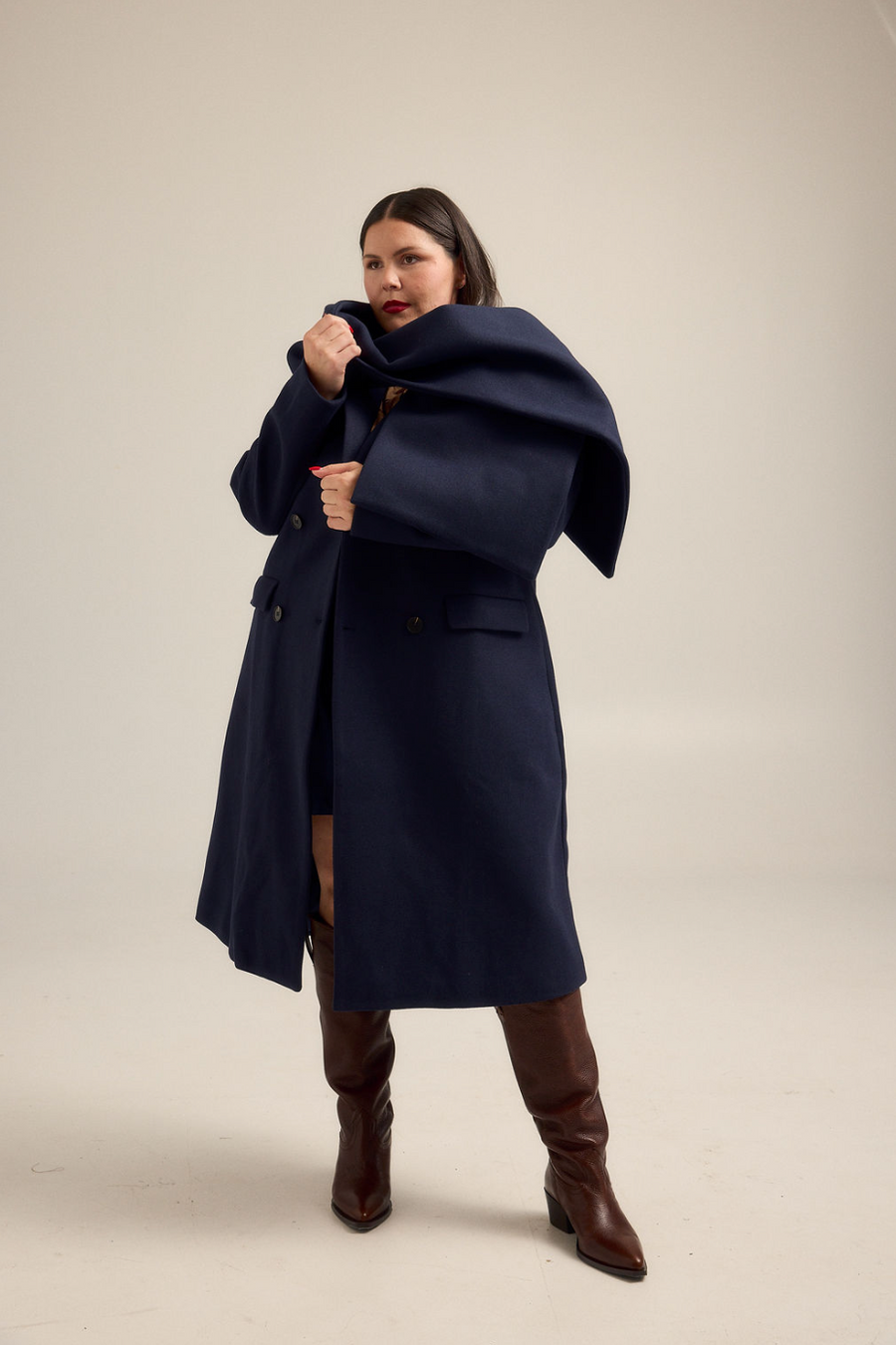
The word “flattering” gets tossed around like a compliment, but it has always come with conditions. It rarely means expressive. It rarely means comfortable. Most of the time, it means conforming. Smaller. More acceptable. Closer to an ideal that was never designed with most plus size bodies in mind.
And that is exactly where plus size high waist styles enter the conversation.
These silhouettes are positioned as universally “flattering,” but says who? That belief did not come from our bodies, our comfort, or our lived experience. It comes from fashion media and retail systems that have historically prioritized reshaping women over dressing them.
So, if a high waist fit has ever left you feeling restricted, boxy, or disconnected from your body, you were not doing anything wrong. You were running into a rule that was never meant to support exploration or individuality.
At the start of a new year, when so many of us are reconsidering what we keep and what we let go, it is worth questioning whether “flattering” was ever the goal to begin with.
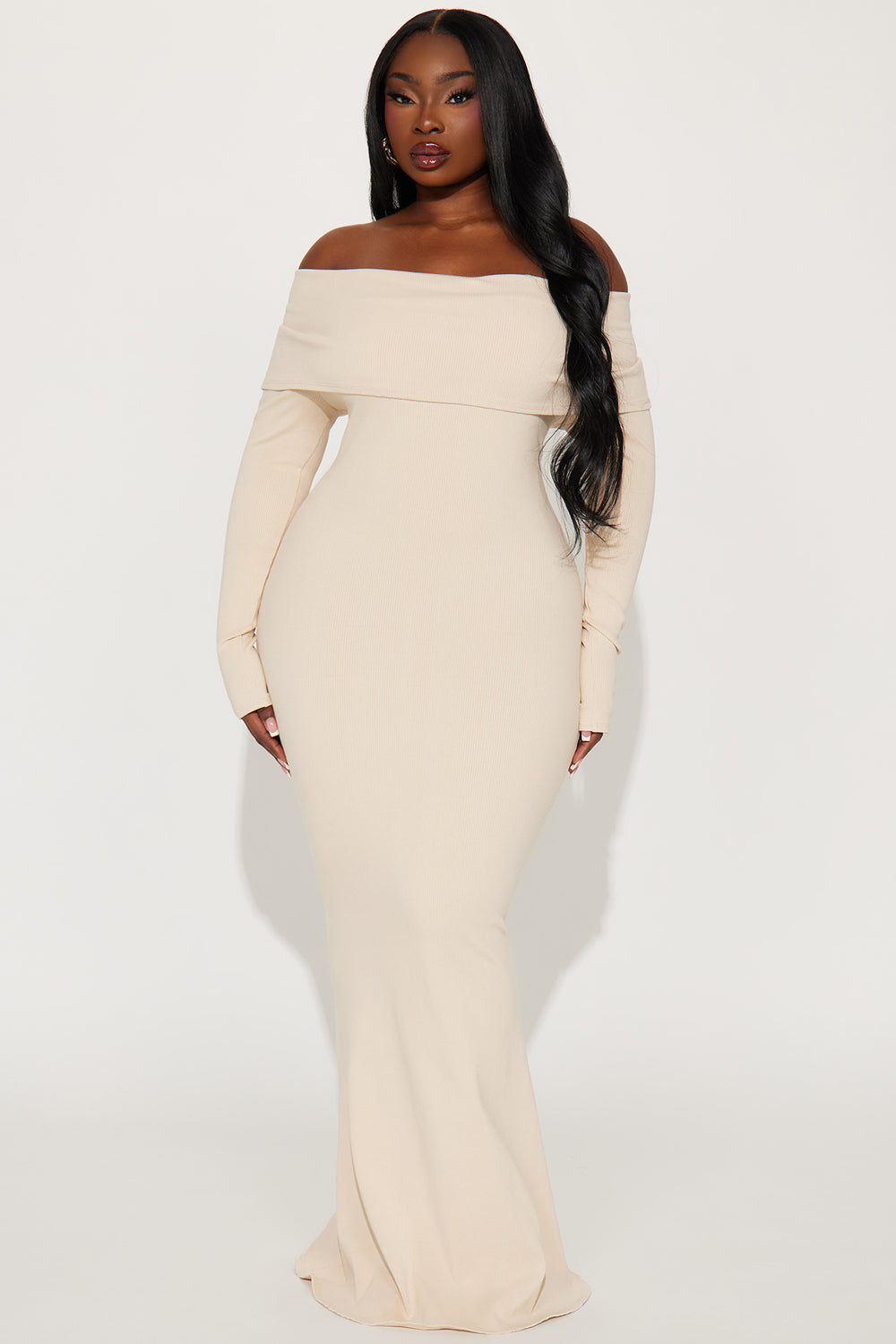
“Flattering” Has Always Been About Conformity
The idea of “flattering” is not neutral. It has a long history rooted in control and correction.
Fashion historian Valerie Steele has written extensively about how women’s clothing has historically focused on disciplining the body, from corsetry to modern shapewear, all framed as elegance or polish.
Plus size high waist styles follow that same lineage. They promise containment, waist definition, and visual order. They are praised not because they work for every body, but because they create a familiar silhouette that reassures an industry still learning how to dress bodies it once ignored.
When something is labeled “flattering,” what is often being implied is not that it supports you, but that it makes your body easier for others to accept.
The Proportion Problem with Plus Size High Waist Styles
Let’s talk about what actually happens in the mirror.
High waist styles create a very clear line across the body. On some proportions, that line works beautifully. On many plus size bodies, it cuts the body in half in a way that feels abrupt and unflattering, no matter how many times we’re told it should look good.
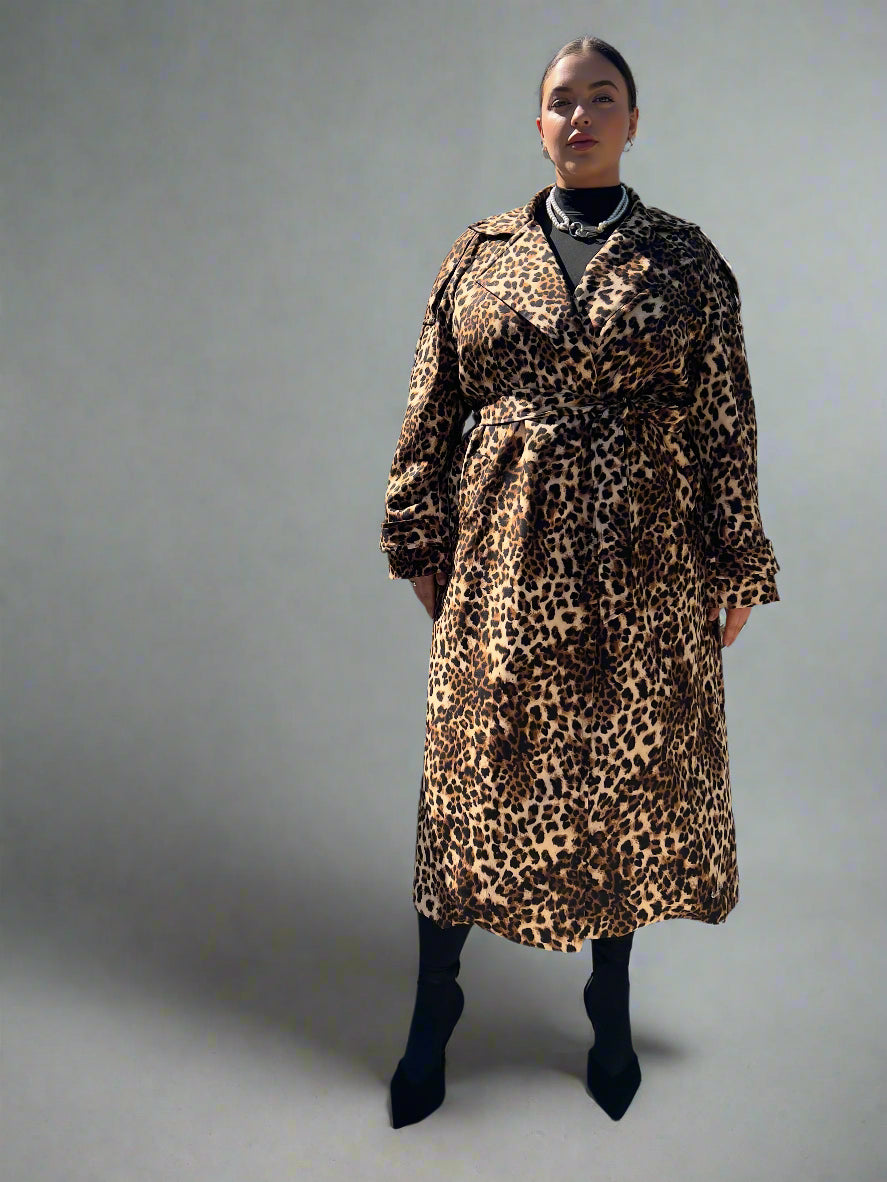
If you’ve ever looked at yourself and thought, Why do my legs suddenly look shorter or Why does my torso feel compressed, this is why.
Celebrity stylist Allison Bornstein often talks about how proportion matters more than trends, especially when it comes to where the eye travels on the body. Strong horizontal breaks can interrupt flow instead of creating length.
In real life, that means a mid-rise or slightly lower rise often lets the body read as one continuous line instead of a series of stacked sections. Nothing is being hidden or corrected. Things just feel more balanced.
And balance almost always looks better than forcing a silhouette that doesn’t want to cooperate.
Why the Waist Rarely Hits Where It Should
If you’ve ever pulled on a pair of high waist pants and thought, Why does this feel like it’s sitting in the wrong place on my body, you’re not imagining things.
One of the biggest unspoken issues with plus size high waist styles is that they’re built on a very specific assumption. That everyone’s waist lives in the same spot.
Spoiler. It doesn’t.
Most mass-produced clothing is designed using standardized measurements, which means brands decide where the “waist” goes before your body ever enters the conversation. Apparel fit researcher Susan Ashdown has published extensive research showing that these standards rarely account for differences in torso length, especially in extended sizes.
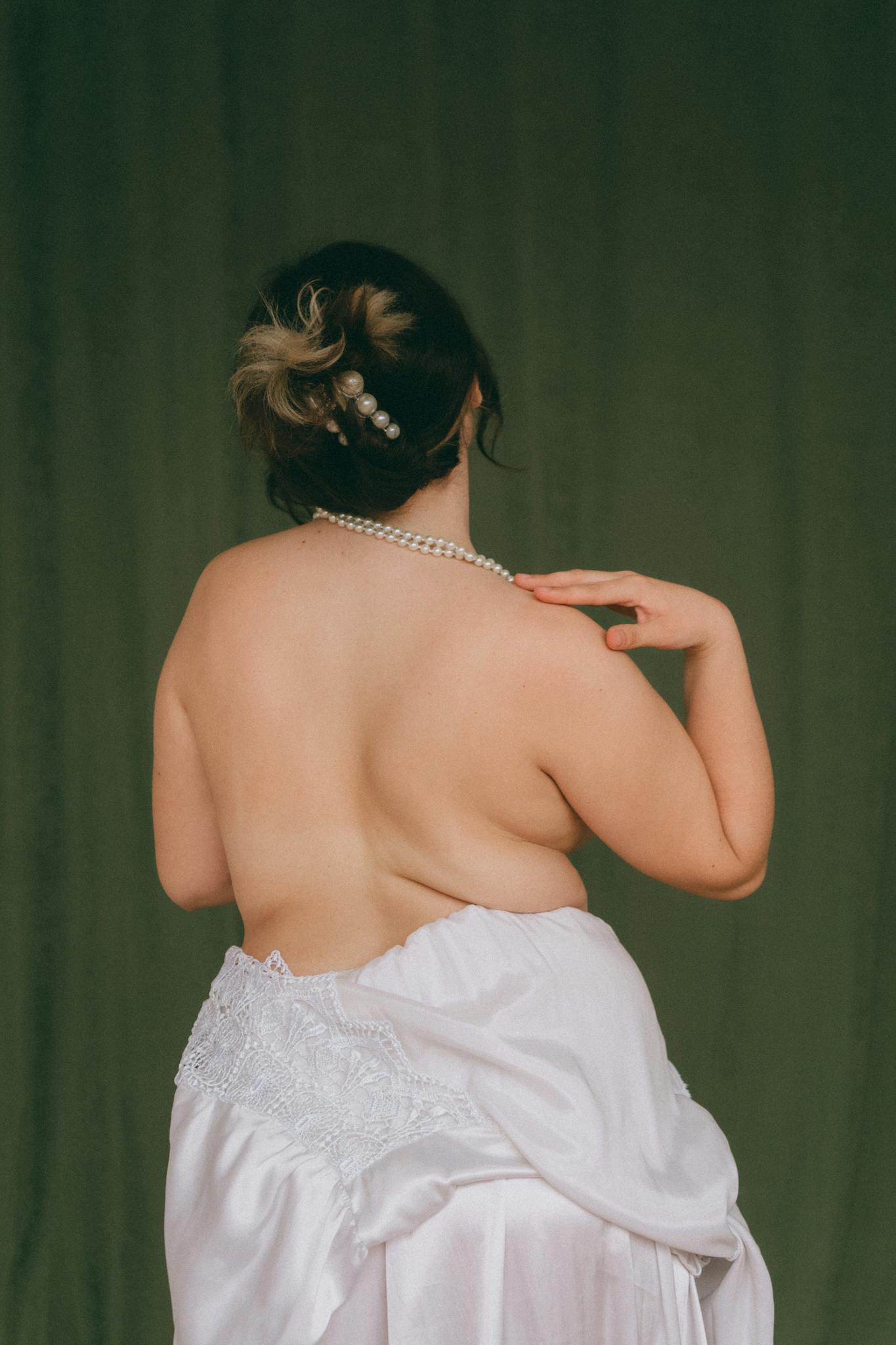
In real life, that looks like this. On one body, a high waist shoots straight up under the bust and suddenly feels more empire than intentional. On another, it lands right across the fullest part of the stomach, exactly where nothing wants to be squeezed or spotlighted. Instead of defining the waist, the fit ends up doing the opposite.
And then comes the worst part. We’re told to assume the issue is us. We start side-eyeing the size tag. Wondering if we grabbed the wrong fit. Thinking maybe we just need to try a different brand, a different cut, a different version of ourselves. That we need to size up, pull harder, or “just get used to it.”
Nope.
When a garment consistently misses the mark on different bodies, that’s not a personal styling failure. That’s a design limitation. A pattern problem. A reminder that plus size bodies are far more varied than the templates most brands are still using.
Once you know that, a lot of fitting room frustration suddenly makes sense. And even better, it stops feeling personal.
“Flattering” Sounds Like a Compliment, But It’s Usually a Dress Code
If you’ve been plus size long enough, you’ve heard it more times than you can count.
“That’s so flattering on you.”
And at first, it sounds nice. Encouraging, even. But after a while, you start to notice a pattern. “Flattering” almost never means bold. It rarely means interesting. It definitely doesn’t mean experimental. What it usually means is that your outfit made you look smaller, more contained, or closer to what someone else feels comfortable seeing.
Plus size creators have been calling this out for years, because once you hear it, you can’t unhear it.
Plus size fashion creator Tara Jane Style has spoken candidly about how “flattering” is often just polite code for “that makes you look thinner,” because thinness is still treated like the default beauty standard. When someone says “that’s flattering,” what they often mean is “that hides the parts I’ve been taught to judge.”
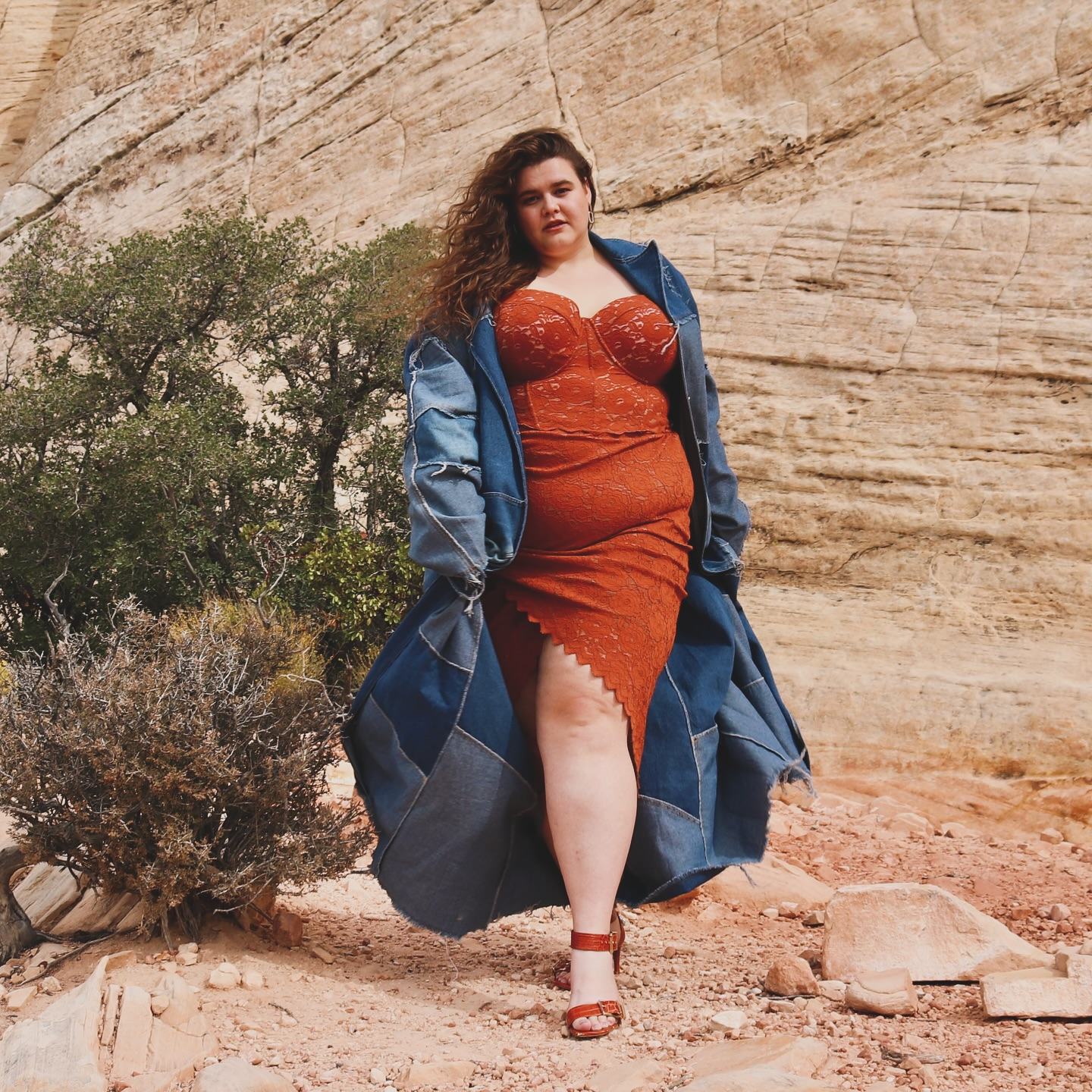
And honestly, that realization can be freeing. Because once you understand that “flattering” is not about you feeling good, but about other people feeling reassured, it loses a lot of its power.
The Curvy Sewing Collective puts it even more plainly. They’ve written about how compliments tied to “flattering” reinforce the idea that plus size bodies are problems to be solved. Clothes, they remind us, are not here to fix us. They are here to express, adorn, and support the bodies we already have.
So, when plus size high waist styles are positioned as the universally “flattering” answer, it’s worth slowing down and asking what’s really being asked of us. Are we being encouraged to explore personal style, or are we being nudged back toward conformity with a prettier label?
At TCF, we’ve always been more interested in the outfits that make you feel like yourself than the ones that make you disappear. And once you see “flattering” for what it really is, you get to decide whether it belongs in your closet at all.
Compression Is Not the Same as Support
Here’s where fashion advice really starts to gaslight us.
We’ve been taught that tighter equals better. That if a waistband is firm enough, it will magically smooth everything out and make an outfit look more “polished.” But if you’ve ever worn a high waist style for a full day, you already know how that story actually ends.
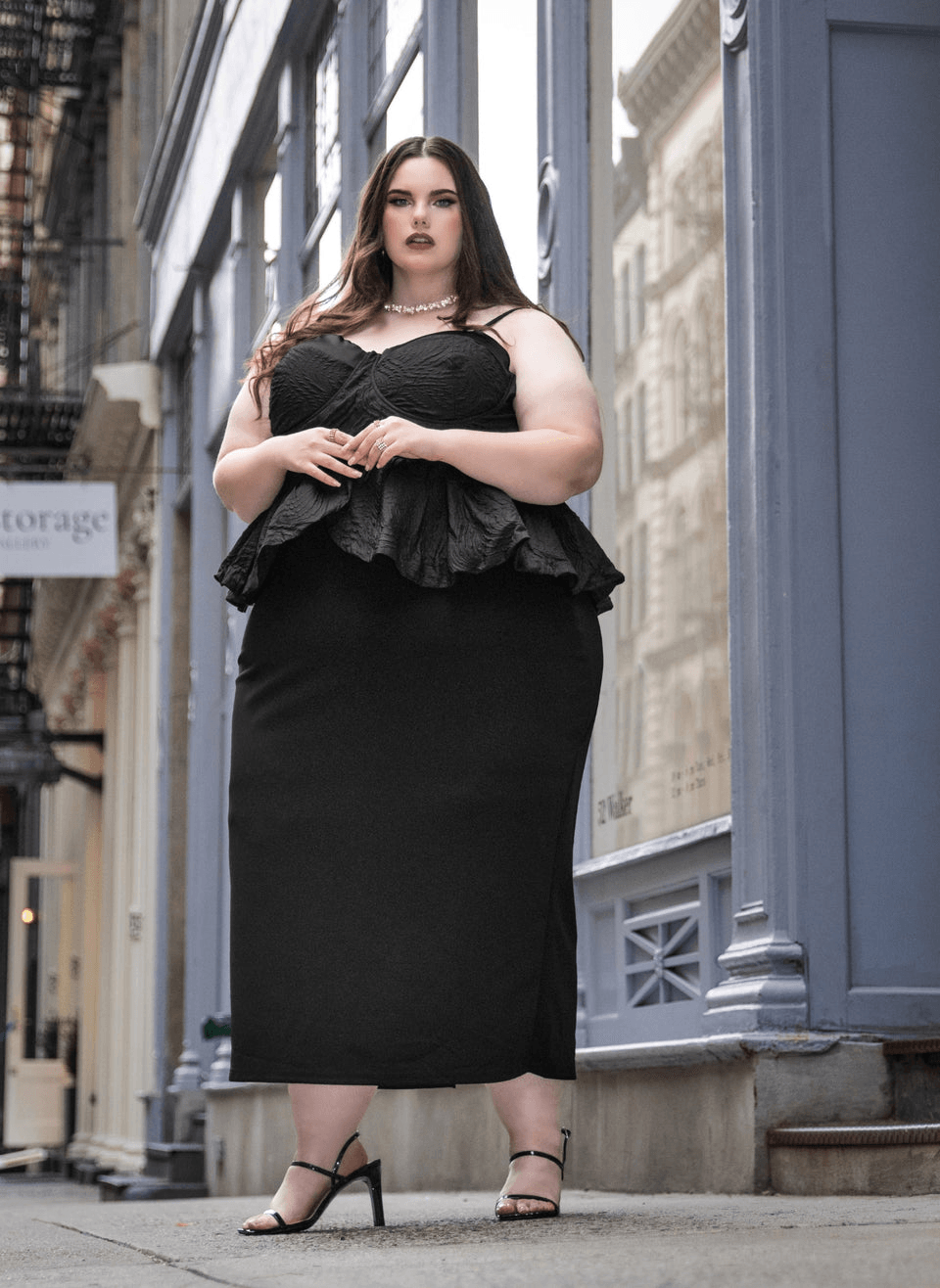
That tight waistband doesn’t disappear your softness. It just pushes it somewhere else. Up toward your ribs. Down toward your hips. Suddenly you’re adjusting in the mirror, tugging at your top, and wondering why the outfit that looked fine standing up feels wrong everywhere else.
Meanwhile, a mid-rise or lower rise style with a wider, softer waistband spreads that pressure out instead of concentrating it in one unforgiving line. The fabric works with your body instead of fighting it. You look smoother not because anything is being “held in,” but because nothing is being aggressively shoved around.
And it’s not just anecdotal. There’s actual research showing that how pressure is distributed in clothing affects both comfort and how a fit looks. When pressure is spread more evenly, garments feel better and read better on the body.
So, if you can’t breathe comfortably, sit without thinking about your waistband, or make it through the day without adjusting, that’s not a discipline issue. That’s a design issue.
And no amount of “but it’s flattering” makes that worth it.
Sitting Down Tells the Truth
Standing mirrors are generous. Sitting is honest.
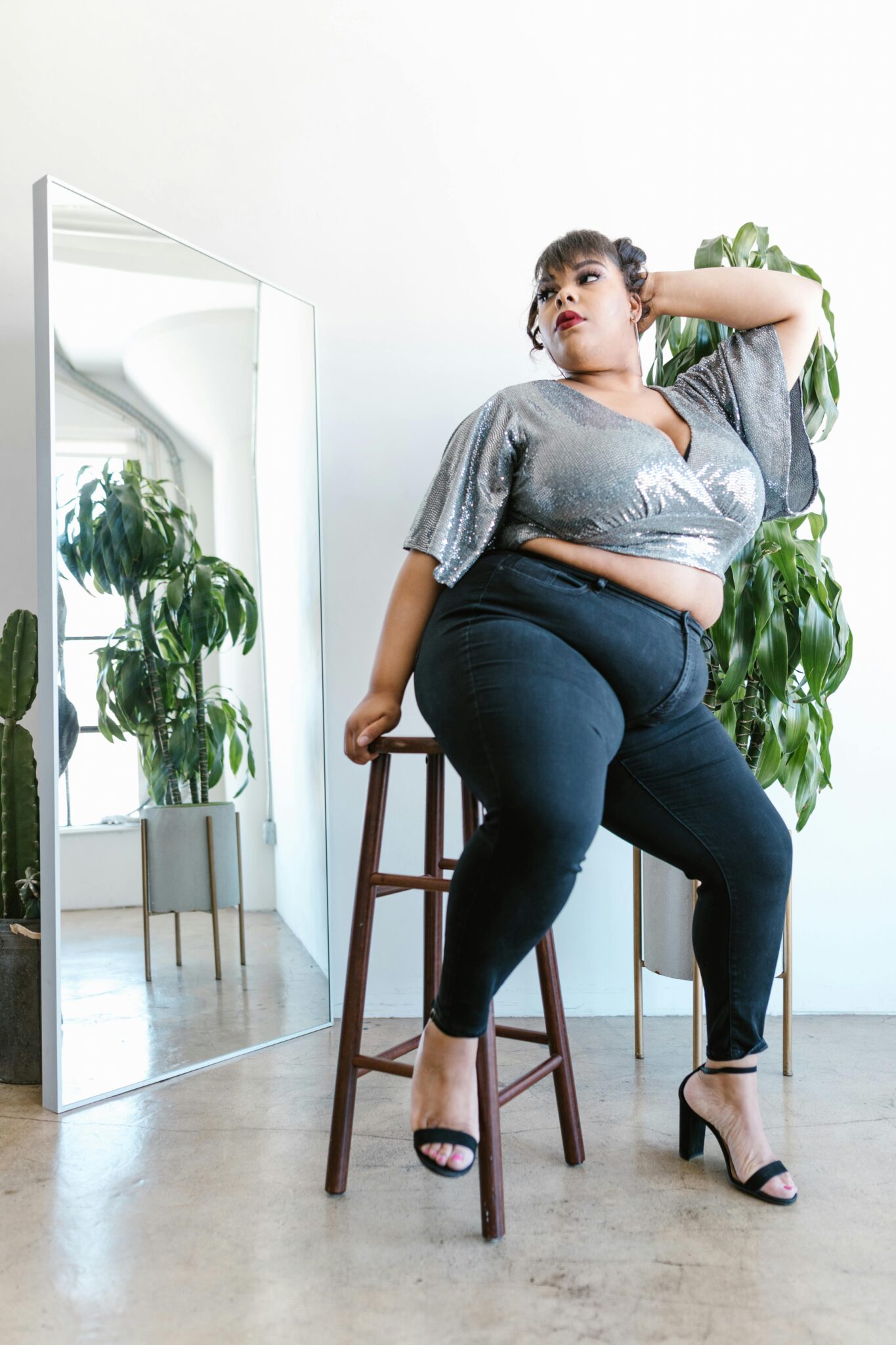
Plus size high waist styles compress the exact area your body needs to fold and expand throughout the day. That is why discomfort shows up at brunch, during meetings, or halfway through a long afternoon.
Garment ergonomics research (who knew that this was a thing?!) confirms that clothing interfering with natural flexion points increases discomfort and reduces wearability.
Style that only works when you are standing still is not functional style.
Plus Size Style Has Been Letting Go of Rules for a While Now
Here’s the part that often gets overlooked. This shift away from rigid style rules did not come out of nowhere.
At TCF, we have spent years unpacking and outright challenging the so-called rules plus size women were told to follow. Cover this. Hide that. Balance everything. Define your waist at all costs. We have written about why those myths do more harm than good, and why style gets a lot more interesting when you stop dressing for approval and start dressing for yourself.
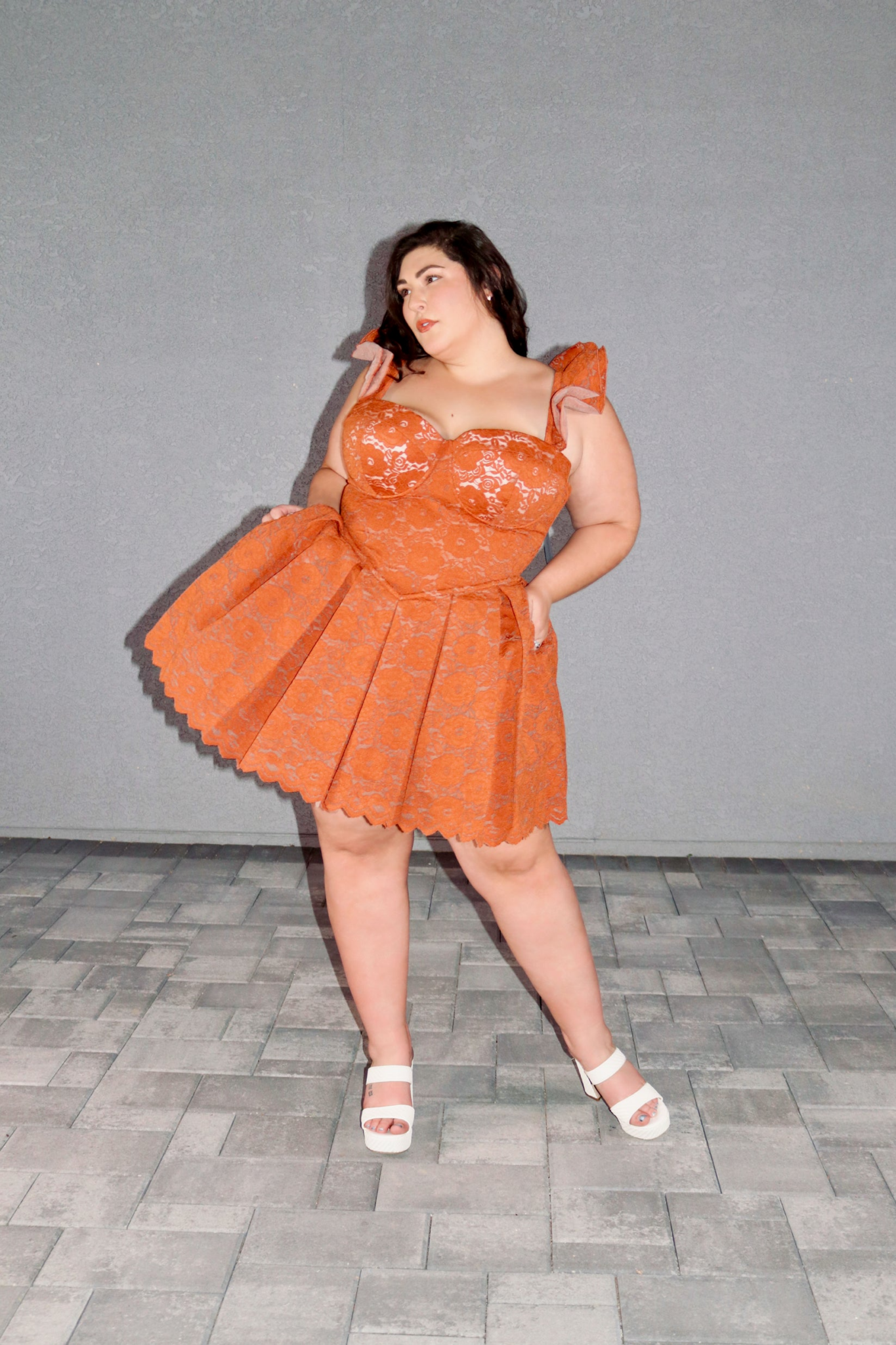
So, when we talk about moving away from “flattering” as the end goal, this isn’t a trend. It’s a continuation.
You see it echoed in the broader fashion conversation, too. A first-person essay published in Fashion Journal described what happened when the writer stopped following outdated plus size fashion rules and started dressing from joy instead of strategy. The result was not chaos. It was confidence.
That mirrors what we’ve seen again and again in our own community. When plus size women release the pressure to conform, style stops feeling like a checklist and starts feeling like play. You experiment. You trust your instincts. You choose what works for your body and your life, not what someone once labeled as “correct.”
This is what it looks like when fashion becomes self-defined instead of approval-based.
And honestly, it’s a much better use of your closet.
What to Carry into the New Year
Let’s land this where it belongs.
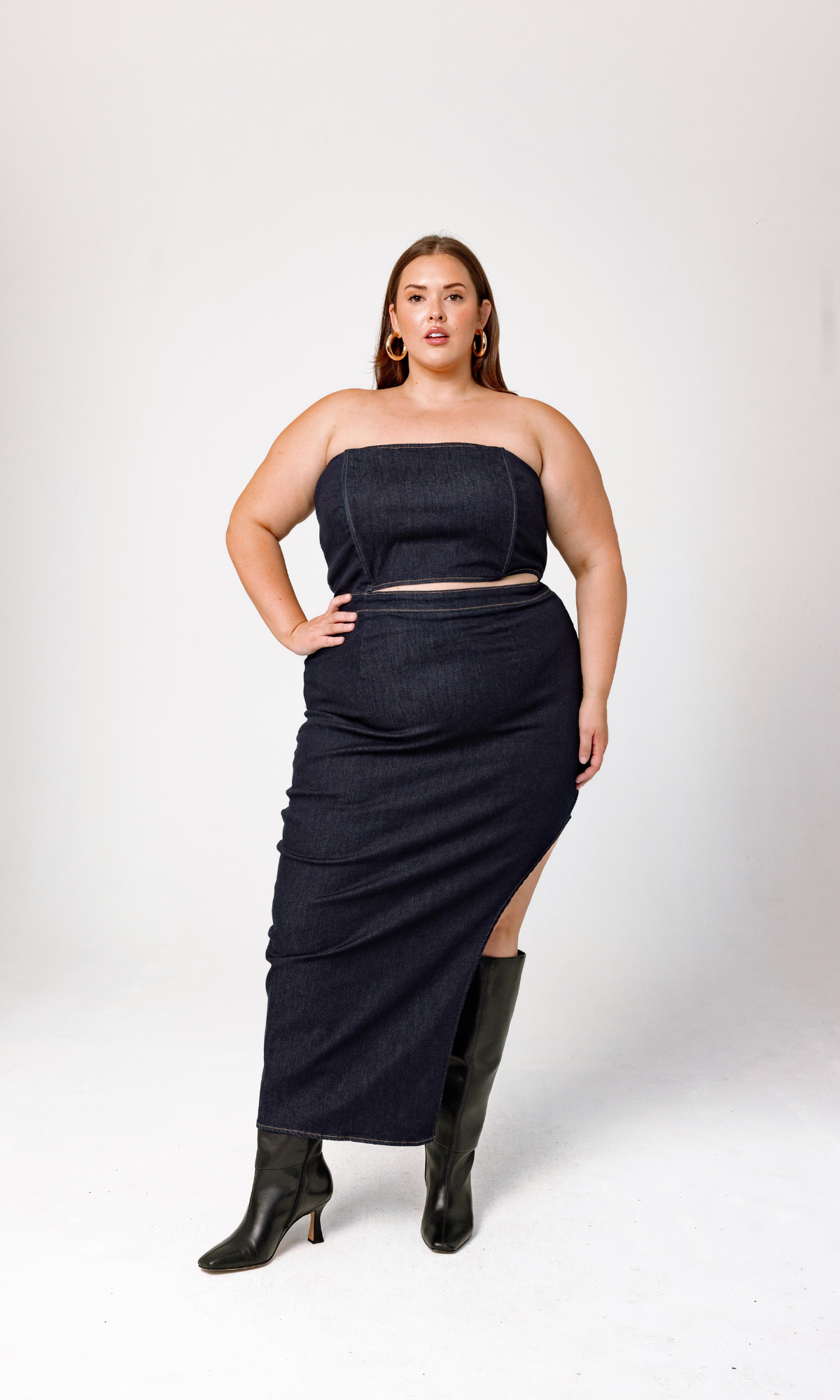
At the beginning of the year, everyone talks about upgrades. New habits. New rules. New ways to do things “better.” But the real upgrade might be quieter than that.
It might be trusting your body again.
Stop dressing for rules that never considered your proportions. Stop chasing “flattering” as if it’s a prize you have to earn. Start paying attention to how clothes feel on your body and how they support your actual life.
Plus size high waist styles are not the villain. Blind loyalty to them is.
Your style does not need to conform. It deserves room to breathe, move, and explore.
And if it makes you feel like yourself, it’s already doing its job.
That’s not a trend. That’s style.
MORE TCF GAMES

You make good points, but high-waisted things don’t have to be tight or compress the body.
I have a long torso and shorter legs, and high-waisted (comfortable and not tight!) jeans and pants make me look more proportional and feel more confident. I actually want to tuck my tops in and wear cute belts when I wear these. Mid and low rises mean I have to keep hiking up my waistband and worry about plumber butt.
So where a waist hits really depends on the person’s body and preferences.
Exactly and I am right there with you on the having to hike up my pants… not cute nor comfy!