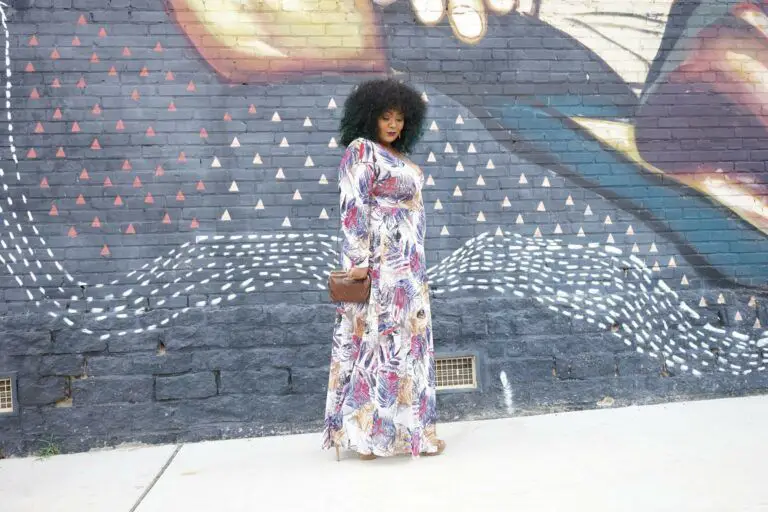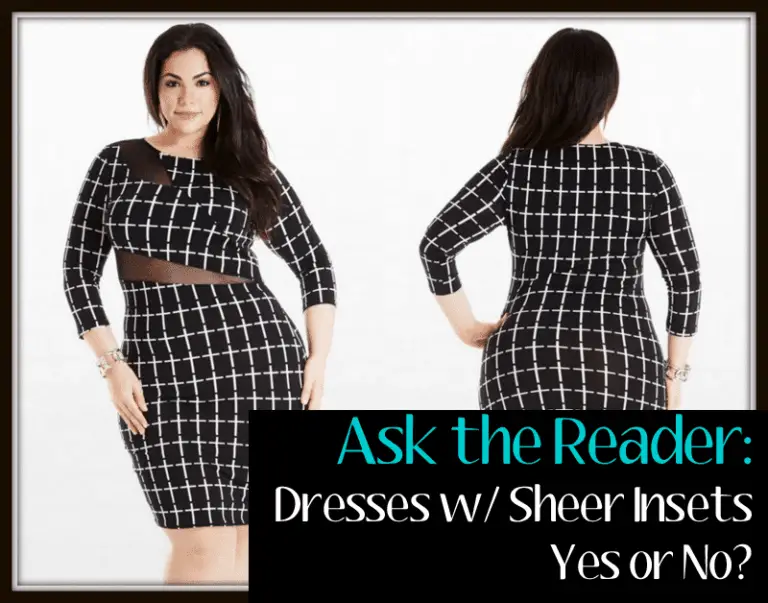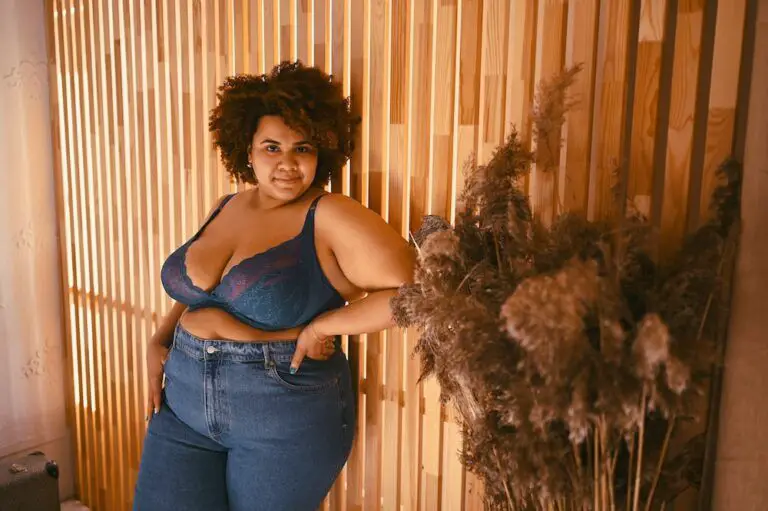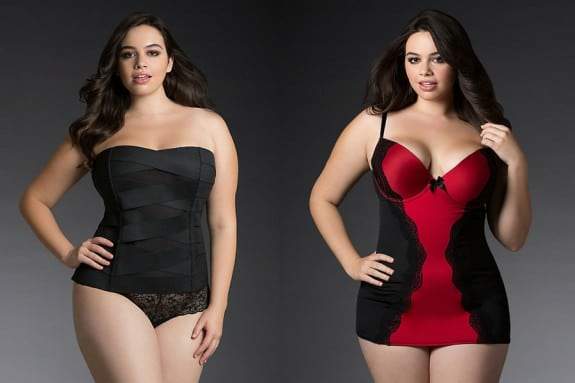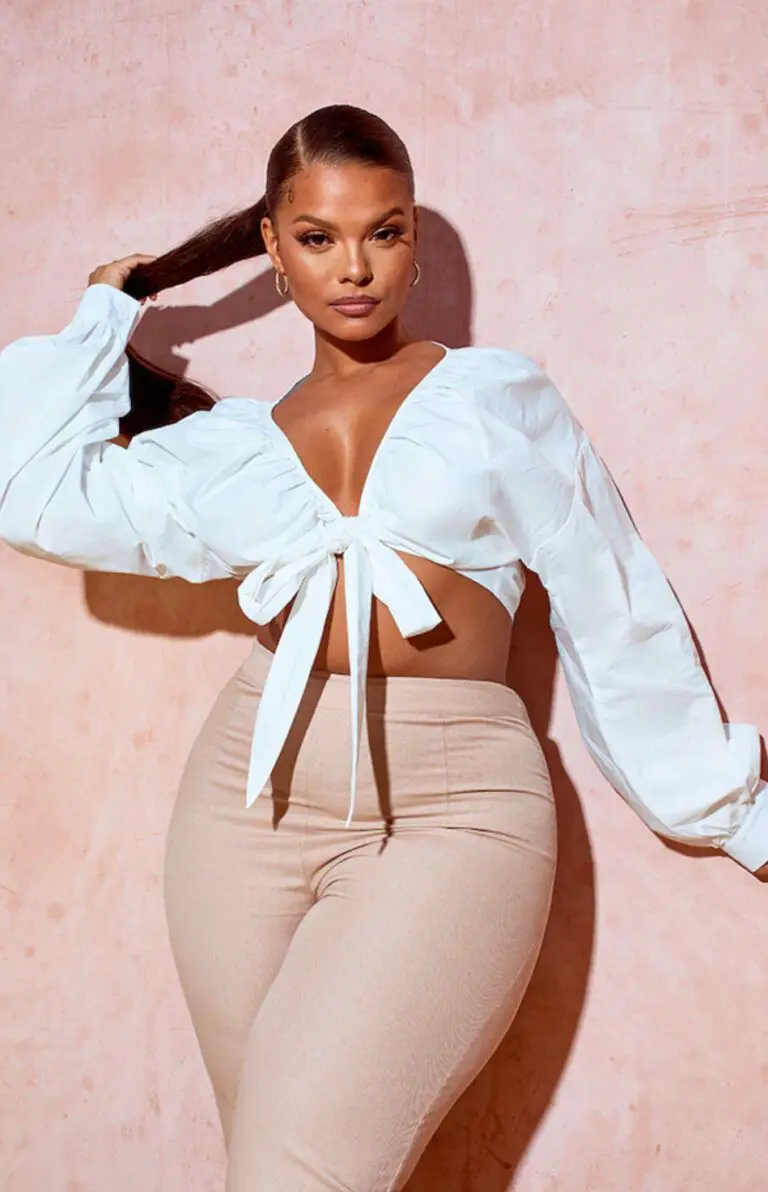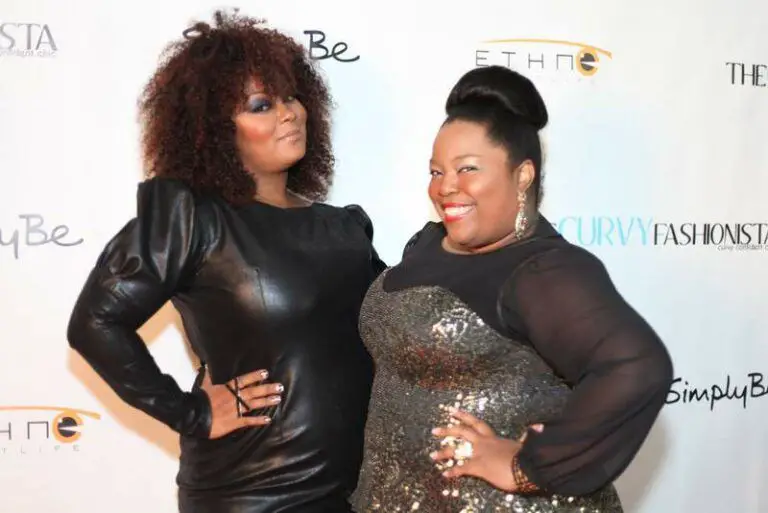
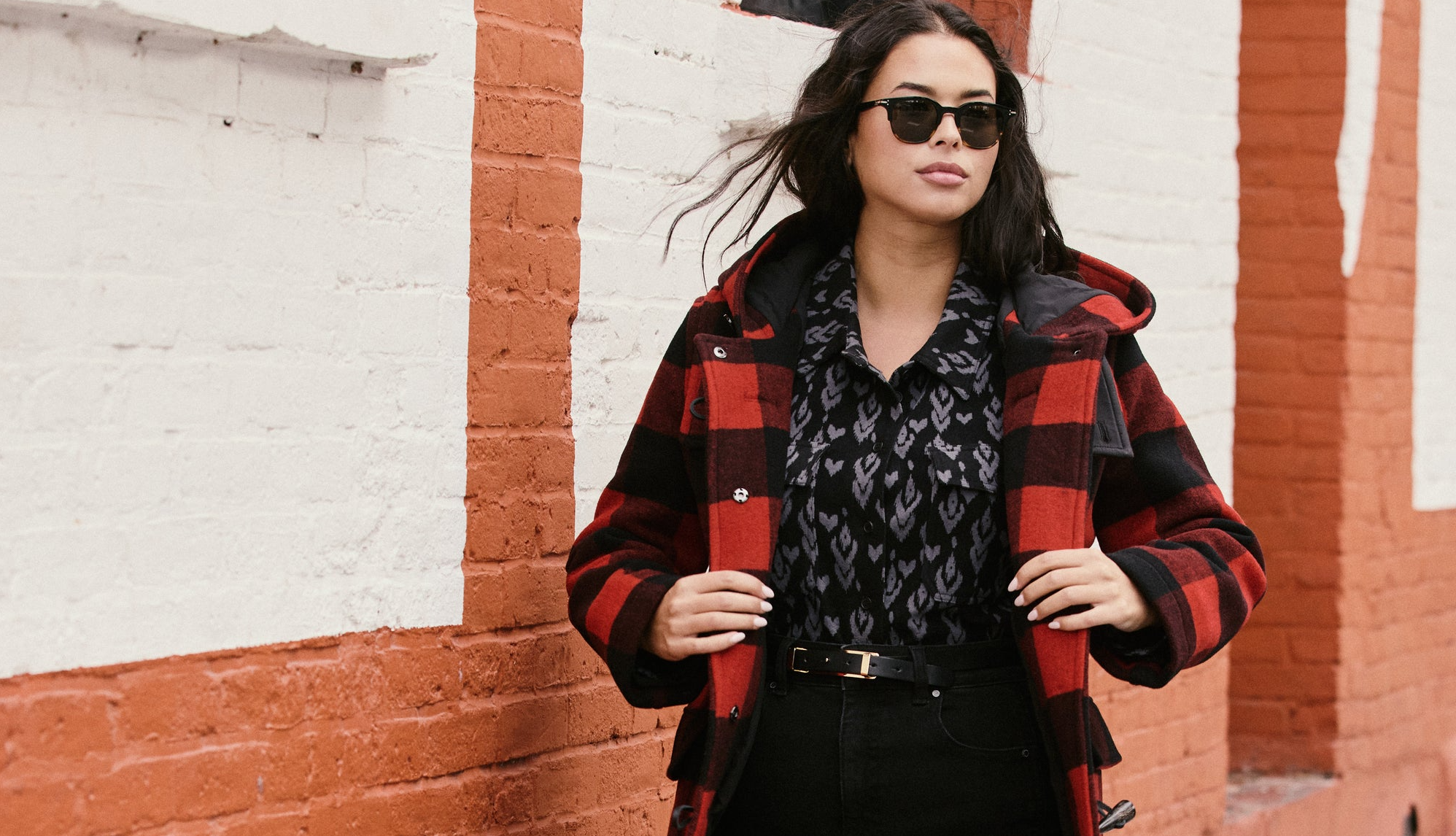
You know that moment. You put the outfit on. You love the top. You love the pants. Separately, they are doing their job. Together? Chaos. Confusion. Mild disappointment.
Before you side-eye your mirror or blame your body, let’s talk proportions.
The rule of thirds is not a trend, a TikTok hack, or a new way to police bodies. It is a long-standing visual principle pulled from photography, art, and design that explains why some outfits feel balanced and others feel like they are arguing with themselves.
At its core, it asks one simple question.
Where is the visual break happening?
Instead of splitting your body straight down the middle, the rule of thirds encourages dividing an outfit into uneven sections, usually one third and two thirds. The result feels more dynamic, more intentional, and yes, more leg-forward.
This principle has been studied and documented for decades in visual composition. The Getty Museum outlines it clearly as a foundational design guideline used to guide the viewer’s eye.
Fashion just borrowed it and made it fun.
Why Your Brain Loves This, Even If You Did Not Know It Had a Name
Here is the wild part. Your brain prefers imbalance.
Psychologists have found that odd-numbered groupings and asymmetry create more visual interest and engagement than perfect symmetry.
That means the classic half-and-half outfit, where the top hits right at the hip and the pants start immediately below, often reads flat. Heavy. Static.
When you shift the proportions, the eye moves. The outfit breathes.
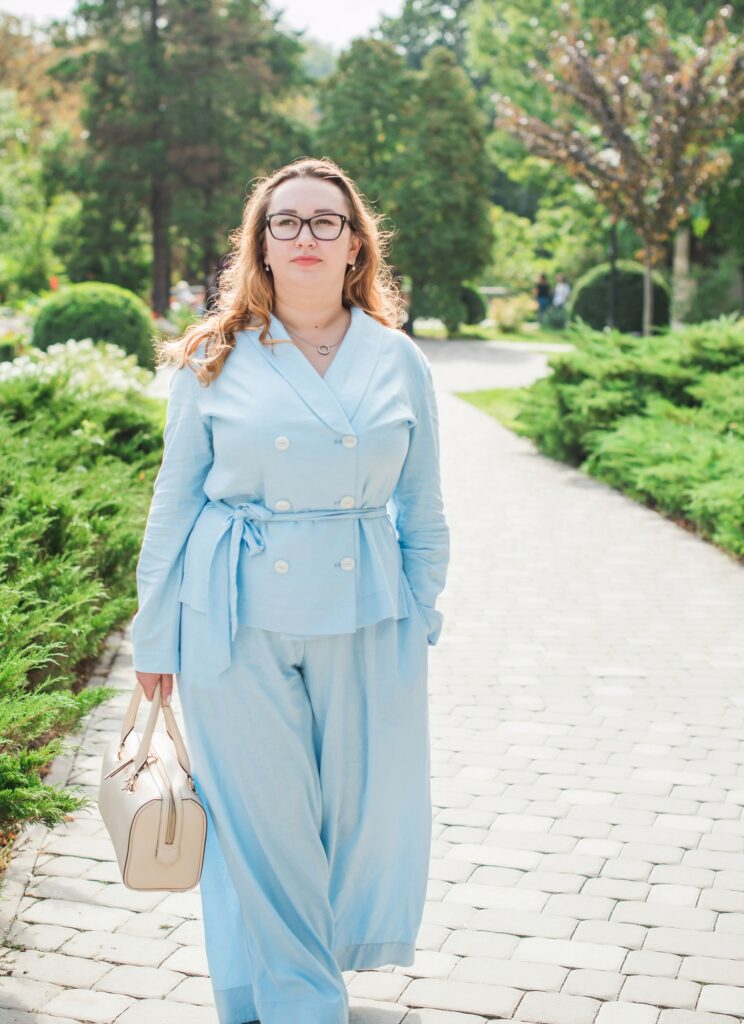
Stylist Allison Bornstein explains it perfectly:
“When you adjust proportions, you change how the outfit feels without changing the clothes themselves.”
Same clothes. Different energy. We love efficiency.
High-Waisted Bottoms Are Not Magic. They Are Optical Science.
High-waisted pants, skirts, and shorts get all the hype because they move the visual starting point of the leg line upward. That is it. No body correction. No illusion of “fixing.”
When paired with a tucked, cropped, or visually shorter top, the lower half of the outfit becomes the dominant two thirds. The result reads intentional and grounded.
Vogue has traced this silhouette across decades, noting how raised waistlines consistently reframe proportion and balance
Important note, because we do not do universal rules here. If you have a shorter torso and prefer mid-rise silhouettes, that is still a valid proportion choice. This is a toolkit, not a uniform.
The Front Tuck Is a Power Move, Actually
Let’s clear something up. The front tuck is not lazy. It is strategic.
By tucking just enough fabric to create a break at the waist, you introduce asymmetry and proportion without committing to a full tuck. Stylists recommend it constantly because it gives control back to the wearer.
Tan France has talked about this exact technique when breaking down every day styling choices.
You decide how much structure you want. You decide how polished or relaxed the look feels. No suffering required.
Layering Will Not Ruin Your Outfit, Promise
One of the biggest myths we hear is that layering cancels out proportion. It does not.
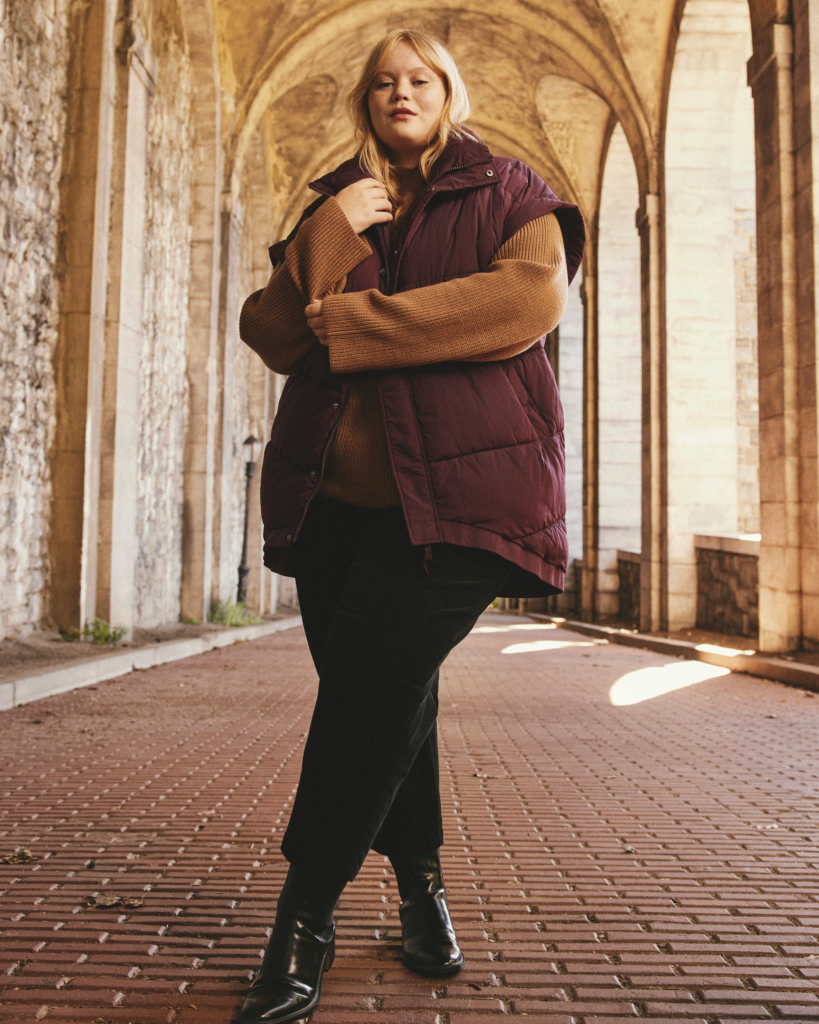
Proportion is set by your base layer. Once that visual relationship exists, jackets, coats, and cardigans become supporting characters.
Who What Wear breaks this down clearly, showing how cropped and longline layers can actually enhance balance when the foundation is intentional
Translation. Wear the coat. Wear the blazer. Be warm. Be cute.
Dresses, Jumpsuits, and the Power of a Visual Pause
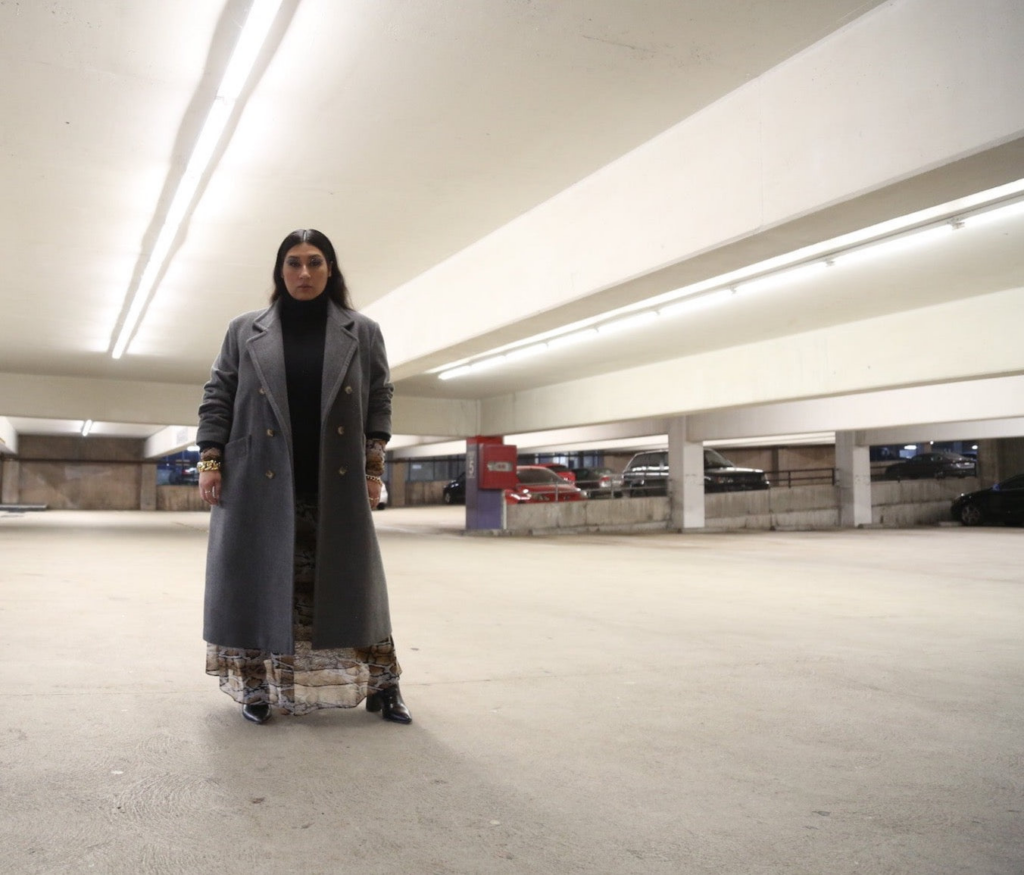
Long silhouettes absolutely work with the rule of thirds. They just need a moment of interruption.
That pause can be a belt, a seam, a wrap detail, or a jacket. Stylists at InStyle often cite belting as a way to add structure and intention to longer garments
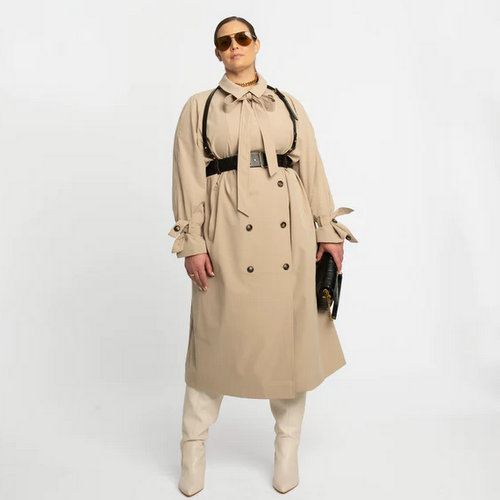
Midi lengths naturally support proportion because they avoid harsh stop points while maintaining flow. Jumpsuits benefit from the same thinking. Add definition where needed. Move on with your life.
Shoes Matter, But Not in the Way You Were Taught
Matching shoes to pants or tights creates a continuous visual line. This is a widely referenced styling principle, including by Harper’s Bazaar.
Pointed or almond toes extend that line. Strong horizontal straps interrupt it.
This is not about banning shoe styles. It is about understanding what they do visually so you can choose with intention, not fear.
Where Proportion Usually Gets Tripped Up
Hard horizontal breaks at the widest part of the body stop visual flow. Tops that land exactly at the hip, capri-length pants, and heavy ankle straps all introduce strong pause points.
That does not mean never wear them. It means wear them knowing the effect.
We reject rules here. We embrace awareness.
Monochrome Is a Quiet Flex
Monochromatic outfits create an uninterrupted visual column, which is why designers and stylists recommend them again and again.
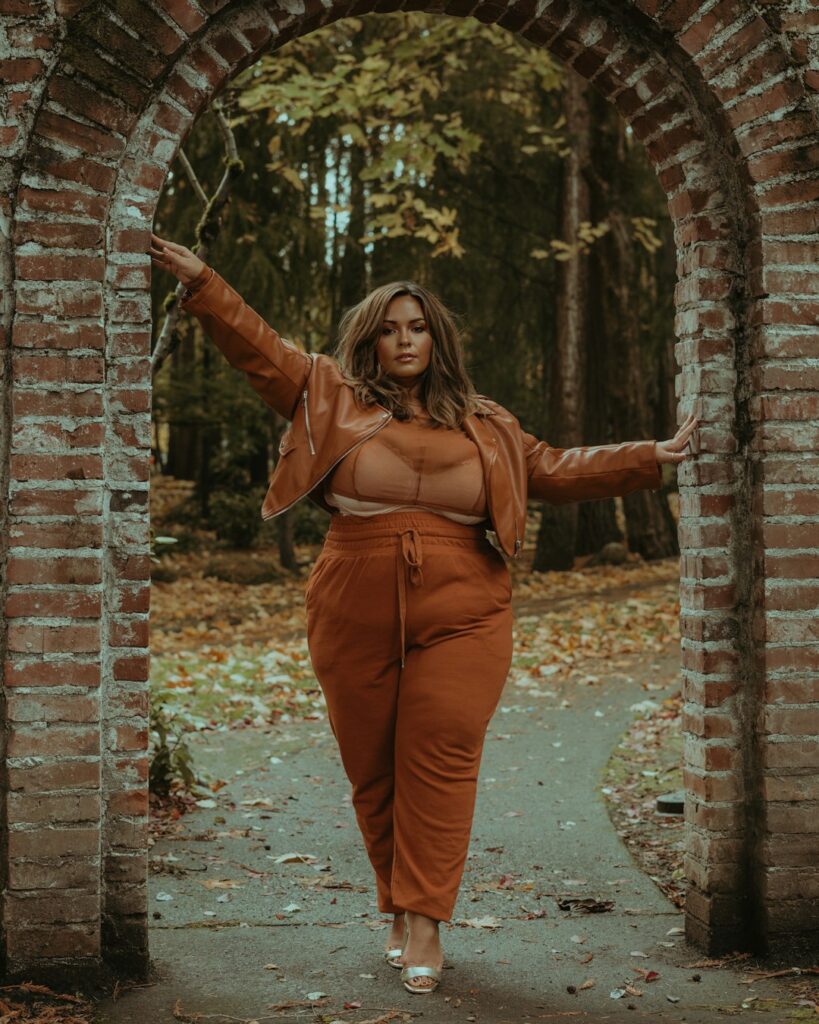
Texture, fabric, and shade variation keep things interesting without breaking the line. Black is not the only option. Neutrals. Color families. Soft contrast. All valid.
Flip the Formula When You Want
Yes, shorter tops and longer bottoms are the most talked-about version of the rule. But the reverse works too.
Longline blazers with cropped pants still honor the one third to two thirds relationship. The point is imbalance, not direction.
This Is Not a Rule. It Is Context.
You have probably been doing this already. Reaching for outfits that feel right without knowing why. The rule of thirds is not about restriction or perfection. It is about understanding why certain looks feel intentional and others feel unfinished.
So, the next time something feels off, do not blame your body. Look at the proportions. Shift the break. Adjust the balance.
Then wear whatever you want, with confidence, because confidence is still the loudest thing you can put on.