

Let me be honest with you for a second.
This article did not come from a place of having it all figured out. It came from the middle of the work.
These past few years have been some of the most clarifying, challenging, and ultimately transformative of my life. I have had to make hard decisions, face issues I tried to bury, release things that no longer served me, and make a very conscious, very deliberate choice to learn what it actually means to trust myself. Not perform confidence. Not project certainty. Actually trust the woman I am and the instincts I have built over a lifetime.
That journey is still happening. And because I believe we are all walking through something, and because I have never seen the point in pretending otherwise, I wanted to open this conversation honestly.
Self-trust is not something you wake up with one day fully formed. It is something you practice, sometimes stumble through, and slowly, quietly build. And when it starts to click? Everything shifts.

I noticed it in myself before I had language for it. Decisions that used to spin me out for days started getting made with more clarity. I stopped needing the room to agree with me before I felt okay about my choices. I started showing up for my own goals with the same energy I had always given everyone and everything else.
And I thought, if I am going through this, you probably are too.
So, let’s talk about the signals, because you might already be further along than you think.
So, What Does Self-Trust Actually Look Like?
Nobody gives you a heads-up when it happens. There’s no notification. No ceremony. No moment where someone taps you on the shoulder and says, “Congratulations, you officially trust yourself now.”
It sneaks up on you. A decision you make without agonizing over it for three days. A situation you walk away from because something in your gut said nope, even when everyone else thought you were making a mistake. A quiet, settled feeling that didn’t used to be there: self-trust.
Self-trust is one of those things that sounds simple until you realize how rare it actually is, especially when you’ve spent years navigating a world that had opinions about your body, your choices, your worthiness, and your right to take up space. When you’ve been told, directly or indirectly, that you need to earn the right to believe in yourself, trusting your own judgment can feel almost radical.

But here’s what I know: once it clicks? Everything changes. How you move. How you decide. How much energy you stop wasting on other people’s comfort at the expense of your own. So, let’s talk about the signals, because you might already be there and not even know it.
You Stop Asking for Permission to Make Decisions
Remember the era of texting four different friends before you could commit to a haircut? Or the job offer you sat on for two weeks because you needed everyone around you to weigh in before you could trust your own read on the situation?
Yeah. That phase has a name. It’s called not trusting yourself yet, and most of us have lived there longer than we’d like to admit.
When self-trust kicks in, something shifts. You still value the people in your corner. You still ask for input when it actually matters. But you stop outsourcing the final call on your own life to whoever happens to be in your phone contacts. You start moving from a place of knowing instead of needing.

Decisions that used to spin you out for weeks start getting made over your morning coffee. Not because you stopped caring, but because you’ve accumulated enough evidence that your instincts are actually pretty solid. That’s the thing about self-trust: it’s built on receipts. Your own receipts.
You Can Sit With Discomfort Without Catastrophizing
Things go sideways. That’s not pessimism, that’s just life having a personality. Projects stall. Relationships hit walls. Plans fall apart on the exact day you needed them to work. This is non-negotiable.
What IS negotiable is whether you spiral the moment things get hard.
Women who trust themselves have developed a specific kind of internal steadiness. Not the “everything is fine” performative kind. The real kind. The “okay, this is uncomfortable and I don’t have all the answers yet, and I’m not going to implode waiting for them” kind.

When you don’t trust yourself, every setback becomes evidence. Evidence that you made the wrong call, that you’re not cut out for this, that you should have listened to someone else. It becomes a whole thing.
When you DO trust yourself, a setback is just a setback. Hard, maybe. Frustrating, definitely. But not a referendum on your entire worth as a human being.
You’ve handled hard before.
You’ll handle this too.
You’re Done People-Pleasing at Your Own Expense
Let’s be clear about something. Being kind and being a people-pleaser are not the same thing. One comes from genuine care. The other comes from fear.
When you’ve spent time being told, in big ways and small ones, that your comfort matters less than other people’s convenience, people-pleasing can become a survival strategy. You say yes when you mean no. You shrink your needs to fit someone else’s comfort. You apologize for things that don’t require an apology.
Self-trust is what finally gives you permission to opt out of that dynamic.

It doesn’t make you cold. It doesn’t make you difficult. It makes you honest. And the people who genuinely belong in your life will not only be fine with your boundaries, they will respect them. The ones who get weird about it? That’s information too.
You stop over-explaining.
You stop pre-emptively apologizing.
You stop performing smallness to make other people comfortable.
That’s not growth, that’s exhausting. And you’re tired of it.
You Actually Follow Through on Things That Matter to YOU
How many times have you had a goal, a project, an idea, a dream, something that genuinely lit you up, and you quietly let it die because everything else seemed more urgent or more important or more deserving of your time?
That’s not a discipline problem. That’s a self-trust problem. It’s hard to prioritize yourself when you don’t fully believe your goals are worth prioritizing.

Here’s what changes when you start trusting yourself: your own aspirations stop feeling like a nice-to-have and start feeling like a non-negotiable. You carve out the time. You keep the promises you make to yourself. You show up for your own life with the same energy you’ve been pouring into everyone else’s.
Not perfectly. Not every single day. But consistently enough that you start to notice the difference. And that consistency? That’s trust building in real time.
You Don’t Need Everyone to Understand Your Choices
This one is quietly huge.
Your mom doesn’t get the career pivot. Your friends think you’re being impulsive. Your coworker has thoughts, unsolicited, about your decisions. And instead of spiraling into a week-long internal debate about whether you’ve made a terrible mistake, you just… keep going.
Not because you’re dismissing the people you love. But because you’ve realized something important: they can only see your life from their vantage point. They don’t have your full context. They don’t feel what you feel or know what you know. And the idea that you need a unanimous vote from everyone in your life before you’re allowed to make a move is a trap.
You’re not living your life by committee anymore. You might consider the feedback. You might factor in the concerns. But the final call is yours, and you’ve stopped needing everyone to applaud it before you feel okay about it.
That’s a freedom that’s hard to describe until you’re living it.
You’ve Made Peace With Your Past Self
Real talk: how often do you still cringe over decisions you made five, ten years ago? How much mental real estate are you giving to old versions of yourself who were doing the absolute best they could with what they had at the time?
I will be honest. This one is still a work in progress for me.
As a Virgo, perfectionism is not just a personality trait, it is practically a lifestyle. I hold myself to a standard that, if I am being real, I would never apply to someone I love. Every misstep gets filed away. Every moment I did not know better, every decision made from a place of not having the tools or the clarity or the confidence I have now, I have replayed more times than I can count.

And here is the thing about perfectionism that nobody talks about enough: it does not actually push you toward better. It keeps you anchored to what was not good enough. It turns your past into a courtroom where you are always both the defendant and the harshest judge in the room.
I am working through that. Actively, consciously, imperfectly. Because the version of me who made those mistakes was doing the absolute best she could with what she had at the time. She deserves grace, not a cross-examination.
Women who trust themselves have a different relationship with their own history. They are not out here constantly replaying their greatest hits of bad decisions or embarrassing moments or choices that did not pan out. They have extended themselves the same grace they would give anyone else they actually care about.
That does not mean they do not learn from the past. It means they have stopped using the past as a weapon against themselves.
You made decisions with the information, the emotional resources, and the self-awareness you had at that time. You have more now. That is called growth, not failure. And the fact that you can look back with compassion instead of judgment, even when you are still working toward it, even when it is hard, even when your inner Virgo is screaming? That is a signal that you are on your way.
You’re Willing to Bet on Yourself
And here’s the one that ties it all together.
When you trust yourself, you start taking up space in ways that used to feel off-limits. You invest in the dream. You start the thing. You have the conversation you’ve been avoiding. You make the move. You say yes to the room you used to think wasn’t for you.

Not recklessly. Not without thought. But with the deep-down knowing that even if it doesn’t go perfectly, you will figure it out. You will adapt. You will keep going. Because you’ve done it before, and you have the receipts.
The biggest risk has never been failure. The biggest risk is spending years playing it so safe that you never actually find out what you’re capable of. Women who trust themselves have decided that is not the story they’re telling.
They’re betting on themselves. Loudly, quietly, consistently, and without waiting for anyone to give them permission first.
And that changes everything.
A Note Before You Go
I want to be honest with you about something before we close this out.
I am not standing at the finish line of this waving you in. I am somewhere in the middle of it with you. Some of these signals I have fully claimed. Others I am still working toward, still catching myself mid-spiral, still reminding my inner Virgo that done and imperfect beats perfect and paralyzed every single time.
What I know for sure is that the work is worth it. Not because self-trust makes life easier, it does not always. But because living without it is so much harder. Constantly outsourcing your confidence, shrinking to fit, replaying the past like it owes you a different ending, that is exhausting in a way that quietly costs you everything.
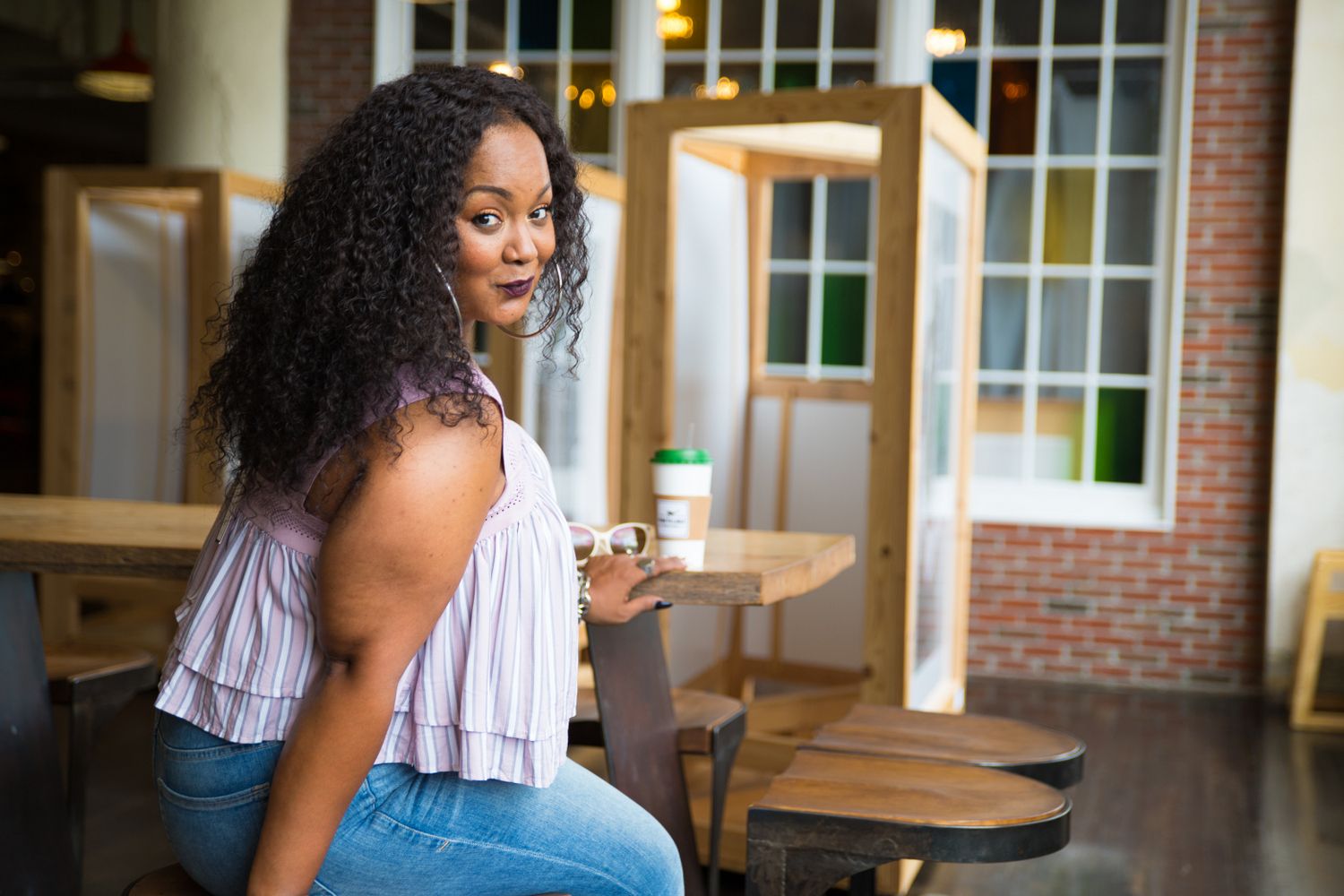
You deserve to bet on yourself. Fully, consistently, without waiting for anyone to give you permission first.
And if you are somewhere in the middle of this journey too, I just want you to know: you are not behind. You are exactly where you need to be. Keep going.
I am right here with you.
Which of these signals hit closest to home for you? Drop it in the comments. We’re having this conversation.
MORE TCF GAMES