
The Apology Gap: Why Are We Saying Sorry for Taking Up Space?
Let’s paint a familiar picture. You’re walking down a crowded sidewalk, and someone bumps into you. Instinctively, you say, “Sorry.” Or you’re in a meeting, heart racing, idea locked and loaded, and you start with, “Sorry, I just wanted to add…”
Pause.
Add what?
Your brain? Your expertise? Your presence?

At The Curvy Fashionista, we talk a lot about confidence, visibility, and owning space because plus size women are constantly told to do the opposite. Be smaller. Be quieter. Be grateful you’re even in the room. The apology gap lives right there in that tension.
And no, this is not about manners. This is about conditioning.
The Research Behind the Apology Gap
The term “apology gap” comes from social psychology research examining gender differences in apologizing. A widely cited study published in Psychological Science found that women apologize more than men not because they do more wrong, but because they perceive their behavior as offensive at a lower threshold.
In other words, women are more likely to think they did something wrong when they did not.
The study, led by researchers at the University of Waterloo, showed that men and women apologize at similar rates when they believe an offense occurred. The difference is that women report believing they committed offenses more often. You can read a breakdown via the American Psychological Association.

Translation: women are not messier, ruder, or more disruptive. We’re just taught to monitor ourselves more closely.
Now layer in plus size identity, where bodies are already treated as inconveniences in public spaces, workplaces, airplanes, stores, and doctors’ offices. That apology reflex makes even more sense.
How We Got Here (Hint: It’s Not Personal)
From a young age, girls are rewarded for being agreeable and penalized for being assertive. Research summarized by the National Association of Women Lawyers and the Pew Research Center consistently shows that women face backlash for behaviors that are praised in men, especially in professional settings.
Girls learn:
- Speak up, but not too much
- Be confident, but not intimidating
- Be visible, but not “too much”
Plus size women get an added layer of policing: take up less physical space, emotional space, visual space.
That is not an accident. That is culture.
The Hidden Cost of Constant Apologizing
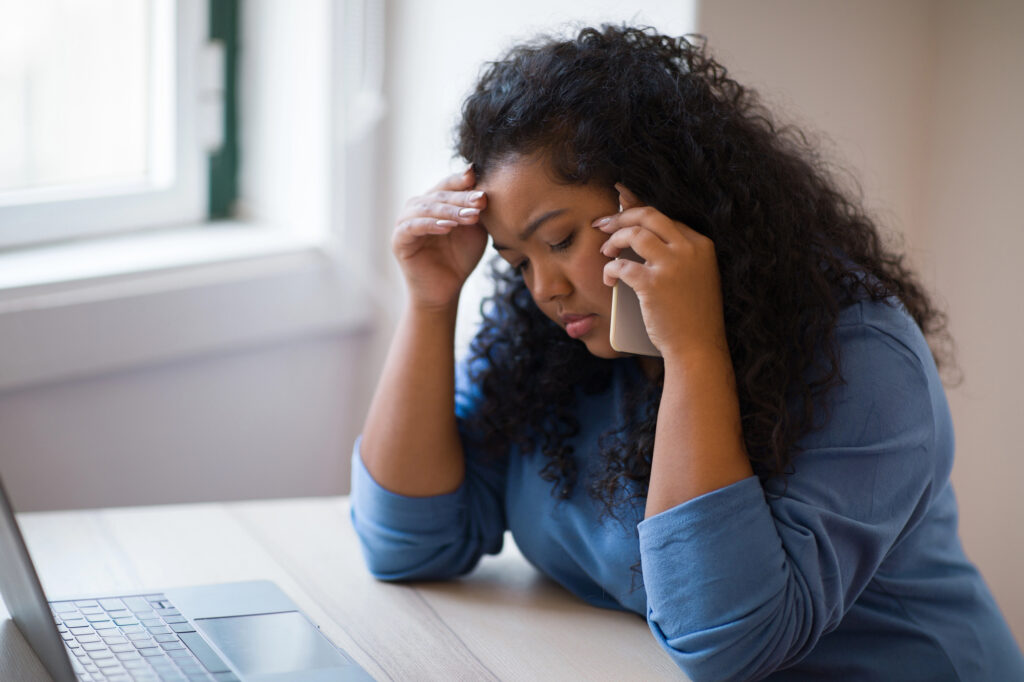
Starting a sentence with “sorry” does something subtle but powerful. It lowers the perceived authority of what follows.
Research on workplace communication has found that excessive apologizing can affect perceptions of competence and leadership potential. A summary of this dynamic is outlined in Harvard Business Review, which notes that apologizing unnecessarily can undermine credibility in professional environments.
This matters. Promotions, pay equity, and leadership opportunities are influenced by perception, not just performance.
And let’s be clear. This is not about blaming women. It’s about recognizing the cost of survival habits we were taught to use.
The Everyday Apology Trap
This isn’t just a workplace issue. It shows up everywhere.
- Saying sorry when you reach for something on a store shelf
- Apologizing when you need someone to move
- Saying sorry for your body existing in a seat, a row, a room
Many plus size women have written powerfully about this hyper-awareness of space. Author and activist Lindy West has explored this in essays about body politics and visibility, including her book Shrill, which details how fat bodies are treated as public property and public problems.

This constant self-monitoring is exhausting. And unnecessary.
What to Say Instead of “Sorry”
You don’t need to be rude to stop apologizing. You just need better language.
Try these swaps:
- “Sorry I’m late” → “Thank you for your patience”
- “Sorry to interrupt” → “I’d like to add something here”
- “Sorry, can I get by?” → “Excuse me”
This isn’t semantics. Language shapes behavior. Behavior shapes confidence.
The Workplace Apology Trap Is Real
Studies on gendered communication styles show that women are more likely to soften statements to avoid backlash. According to research cited by Catalyst, women leaders are often caught in a double bind where assertiveness is penalized and passivity is ignored.
Apologizing becomes a shield. But shields can also block growth.
When You Should Say Sorry
Let’s be very clear. Apologies matter when harm happens.

Apologize when:
- You’ve hurt someone
- You’ve made a genuine mistake
- You’ve broken trust or commitment
Over-apologizing, however, can dilute real accountability and make sincere apologies less impactful. Even communication experts caution against habitual apologies because they disrupt clarity and connection.
Taking Your Space Back (Yes, All of It)
Your worth is not measured by how small you can make yourself.
Not your body.
Not your voice.
Not your ideas.
Confidence does not mean arrogance. It means no longer asking for permission to exist.
As the National Women’s Law Center frequently highlights in its work on gender equity, visibility and self-advocacy are critical tools for closing opportunity gaps.
You belong in every room you are qualified to be in. Full stop.

Making the Change Stick
Behavioral researchers note that habit change starts with awareness. The next step is preparation.
Notice:
- Who you over-apologize around
- Where you feel like an outsider
- When your body feels “too present”
Then practice alternatives. Out loud. In advance. It will feel awkward. That’s normal. Growth often does.
You Don’t Need Permission
Here’s your reminder, in bold, underlined, metaphorical neon lights:
You do not need to apologize for existing.
You do not need to shrink to be liked.
You do not need to soften yourself to be taken seriously.
The apology gap is real. But it is not permanent.
Next time “sorry” jumps to the tip of your tongue, pause and ask yourself:
Did I actually do something wrong?
Or am I apologizing for taking up space?
We already know the answer.
Tell us in the comments. Where does the apology gap show up most in your life?