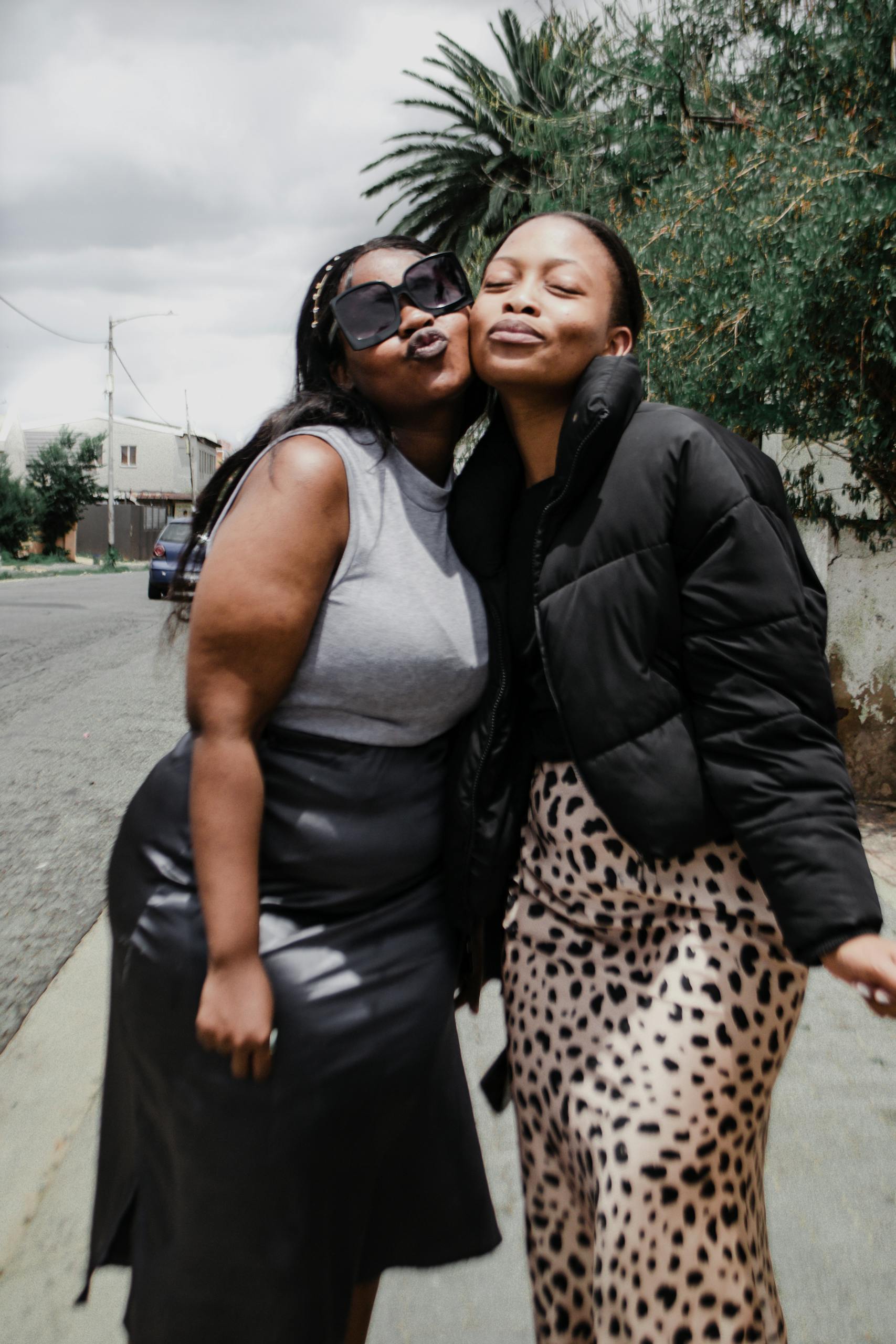
We’ve all been there. A conversation starts innocently enough, maybe over coffee or while shopping together, and then someone drops one of those comments. You know the ones.
The statements that make your plus size friend’s smile freeze, their eyes glaze over, or worse, force them to laugh off something that actually stings. Here’s the thing: most people don’t mean harm. They genuinely think they’re being helpful, complimentary, or just making casual conversation. But impact matters more than intent.
The truth is, navigating friendship means understanding boundaries and sensitivities we might not personally experience. What sounds like encouragement to you might feel like a backhanded compliment to someone else. What seems like a harmless observation could actually reinforce harmful stereotypes about bodies, beauty, and worth.
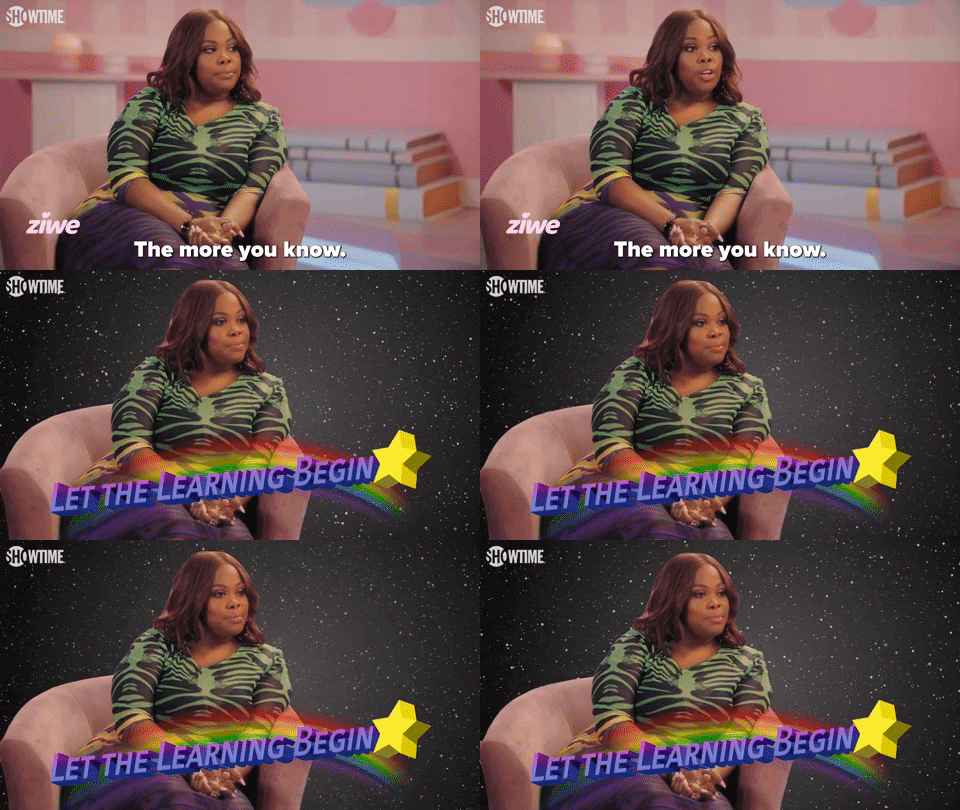
So let’s talk about the phrases that need to retire permanently from your vocabulary when talking to your plus size friends. Trust me, your relationships will be better for it. We’ve pulled some of our favorite finds from the on-screen plus size queens to help express exactly what we mean.
“You Have Such A Pretty Face For A Big Girl”
This classic backhanded compliment tops the list for a reason. When you lead with someone’s face and stop there, the unspoken message screams loud and clear: everything below the neck is somehow less worthy of praise. It’s like saying “You’d be attractive if only…” without finishing the sentence. Your friend hears what you’re not saying just as clearly as what you are.
Pretty faces exist on all body types. The implication that facial beauty somehow compensates for or exists despite body size reduces a whole person to fragmented parts. If you genuinely want to compliment someone, try being specific about what you appreciate.
Their style, their energy, their confidence, the way they light up a room. See them as a complete person, not a collection of acceptable and unacceptable features.
Real compliments don’t come with invisible asterisks attached. They don’t require your friend to mentally fill in the criticism you’ve carefully avoided stating outright. Next time you want to praise someone’s appearance, make sure your words celebrate them entirely, not just the parts you’ve deemed complimentary enough to mention.
“Have You Tried [Insert Diet Name Here]?”
Unless your friend specifically asks for diet advice, keep your wellness tips to yourself. Seriously. The assumption that every plus size person must want to lose weight, must be struggling with their body, or must need your particular solution is exhausting for them to encounter repeatedly. It’s hard to say for sure, but chances are they’ve heard about keto, intermittent fasting, and that juice cleanse your cousin swears by.
This comment also assumes you know better about someone else’s body than they do. You don’t have access to their medical history, their relationship with food, their mental health, or their personal goals. Maybe they’re perfectly healthy. Maybe they’re recovering from an eating disorder. Maybe they’ve tried seventeen diets and decided their peace of mind matters more than fitting into a smaller size.
Your job as a friend isn’t to be an unsolicited health consultant. It’s to support, accept and respect the person in front of you. If they want your input on nutrition or fitness, they’ll ask. Until then, find literally any other topic to bond over. There’s a whole world of conversation beyond body management.
“You’re So Brave For Wearing That”
Let’s be real, calling someone brave for wearing a crop top, a bikini, or anything form-fitting implies they’re doing something risky or transgressive simply by getting dressed. It suggests that showing their body requires unusual courage because their body is somehow inappropriate for public view.
That’s not the compliment you think it is.
Plus size people aren’t soldiers heading into battle when they put on clothes. They’re just wearing outfits they like, the same as anyone else. Framing their fashion choices as acts of bravery others their bodies and reinforces the idea that certain bodies should stay hidden. It makes getting dressed in the morning about making a statement rather than just existing comfortably.
Try this instead: compliment the actual outfit. “That color looks amazing on you” or “I love your style” focuses on their taste and aesthetic rather than implying shock that they dared to wear something. Fashion is for everyone, and your friend doesn’t need a bravery award for participating.
“I Wish I Had Your Confidence”
This phrase sounds positive on the surface, but it implies that confidence in a larger body is somehow more impressive or unusual than confidence in a smaller one. The underlying message suggests that plus size people have more reasons to feel insecure, and therefore their self-assurance deserves special recognition.
Here is the reality from me: I’m the type of girl who loves a crop top or a fitted dress. And yet, every time I hear, “I wish I had your confidence,” I roll my eyes. Confidence is not a novelty act reserved for bigger bodies. It is a quality everyone can have.
Not every plus size person feels wildly confident all the time. Some days we struggle just like everyone else. Some days we feel amazing. Expecting constant confidence turns people into symbols instead of letting them live authentically.
Roughly half of all people wrestle with self-image regardless of size. Confidence is not a body size issue. It is about being fully present in your own skin.
So instead of applauding my self-assurance like it is a circus trick, how about we just talk about my dress, notice my energy, and maybe order a second glass of wine? Appreciate and support your friend as you would anyone else. Confidence is not a sideshow. It just needs space to exist.
“You Would Be So Gorgeous If You Lost Weight”
Believe it or not, people actually say this out loud. Usually they think it is motivational. Spoiler: it is not. This statement tells someone they are not gorgeous now.
It implies their current body prevents them from being truly beautiful. It wraps rejection in a ribbon of concern. Beauty exists at every size. Full stop.
Making someone’s attractiveness conditional on losing weight is not encouragement. It is judgment. It sends the message that their body must change before they can be fully accepted, admired or loved. That is not friendship. That is conditional approval.
If you think your friend is gorgeous, say it plainly. No “but imagine if” scenarios. They deserve to feel beautiful today in the body they already inhabit, not in some hypothetical future version you have decided is more acceptable.
Your friendship should be a safe space, a place where they are seen and celebrated, not a room where their body feels inadequate.
“At Least You’re Healthy”
This sneaky phrase pretends to be reassuring while actually concern-trolling someone’s weight. It implies that health is the metric by which we should judge bodies, and that being plus size automatically raises health questions. It also falsely assumes you have any idea about your friend’s actual health status based purely on looking at them.
Health is complex, personal, and frankly none of your business unless someone chooses to discuss it with you. You can’t determine someone’s health by their size any more than you can determine their intelligence by their height.
Metabolic health, cardiovascular fitness, mental wellness, and overall wellbeing involve countless factors beyond weight. The vast majority of health markers exist on a spectrum regardless of body size.
Even if health were simple to assess visually (it’s not), making it the consolation prize for being plus size is deeply problematic. People’s worth isn’t determined by their health status either.
Chronically ill people, disabled people and people managing various conditions deserve dignity and respect. Stop using health as a weapon to police bodies or as a backhanded way to critique someone’s size.
“You Carry Your Weight Well”
This one might sound like a compliment, but it is actually a mini body audit. It suggests there is a right way and a wrong way to be plus size, and that you have kindly decided your friend passes inspection. At its core, it still centers weight as something to be judged.
The implication is clear: some plus size people do not measure up. It creates a hierarchy of “acceptable” and “unacceptable” bodies. Your friend might fit certain beauty ideals, like having an hourglass figure or storing fat in “flattering” spots, but that does not make them more deserving of respect than anyone else.
Here’s the simple truth: drop the evaluations entirely. Your friend’s body does not need your rating or approval. They are not auditioning for the role of “acceptable plus size person.” They are just existing in their body, and it does not require commentary about how well they carry it. Notice them, appreciate them, and let their body exist without judgment.
“I’m So Fat” (While Obviously Smaller)
Picture this: you are sitting with your plus size friend, and you grab your stomach or thigh and announce how fat you feel. You might think this builds solidarity or shows you understand body image struggles. The truth is, your friend does not hear that.
What they hear is a record-stopping, “Is this B*tch serious?” moment as they stare straight into the imaginary camera, wondering how you could even say that. They hear that you see their actual size as a worst-case scenario, something to fear, something shameful.
When someone smaller complains about being fat to someone who is actually plus size, it sends a clear message: being their size is unacceptable and distressing to you. You have made their body the cautionary tale, the nightmare scenario you hope to avoid. That is hurtful. No amount of “I didn’t mean it like that” can erase the impact.
A better approach is to keep the focus on yourself without comparisons, or to process body image feelings with people closer to your own size. Your friend should not have to comfort you about the size they live in every day.
Body image struggles are real across all sizes, but venting about your own insecurities to someone who lives in a larger body daily requires more awareness. Find friends closer to your size to process those feelings with, or better yet, examine why you’ve internalized fatness as the ultimate negative outcome.